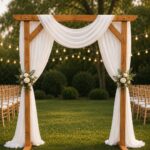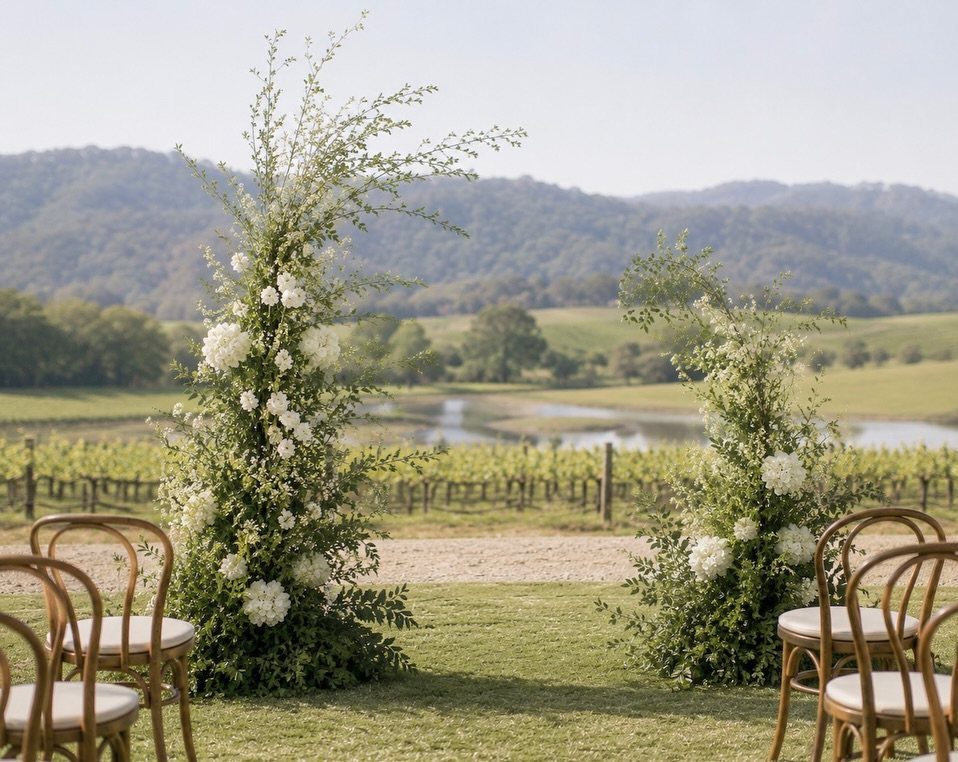
Wedding ceremony flowers range from a single pinned boutonnière to a flower arch to a fabric-draped backdrop on weighted pedestals, and the decisive factor is usually whether your florist stays for setup or your own hands do.
A wired arch looks dreamy in photos, but someone pays for that time, either in florist fees or in hours from their own weekend.
Garden roses, lisianthus, and delphinium appear throughout these 12 ideas because they hold up where heat, wind, and guest scrutiny all arrive at once.
1. Seasonal Flowers
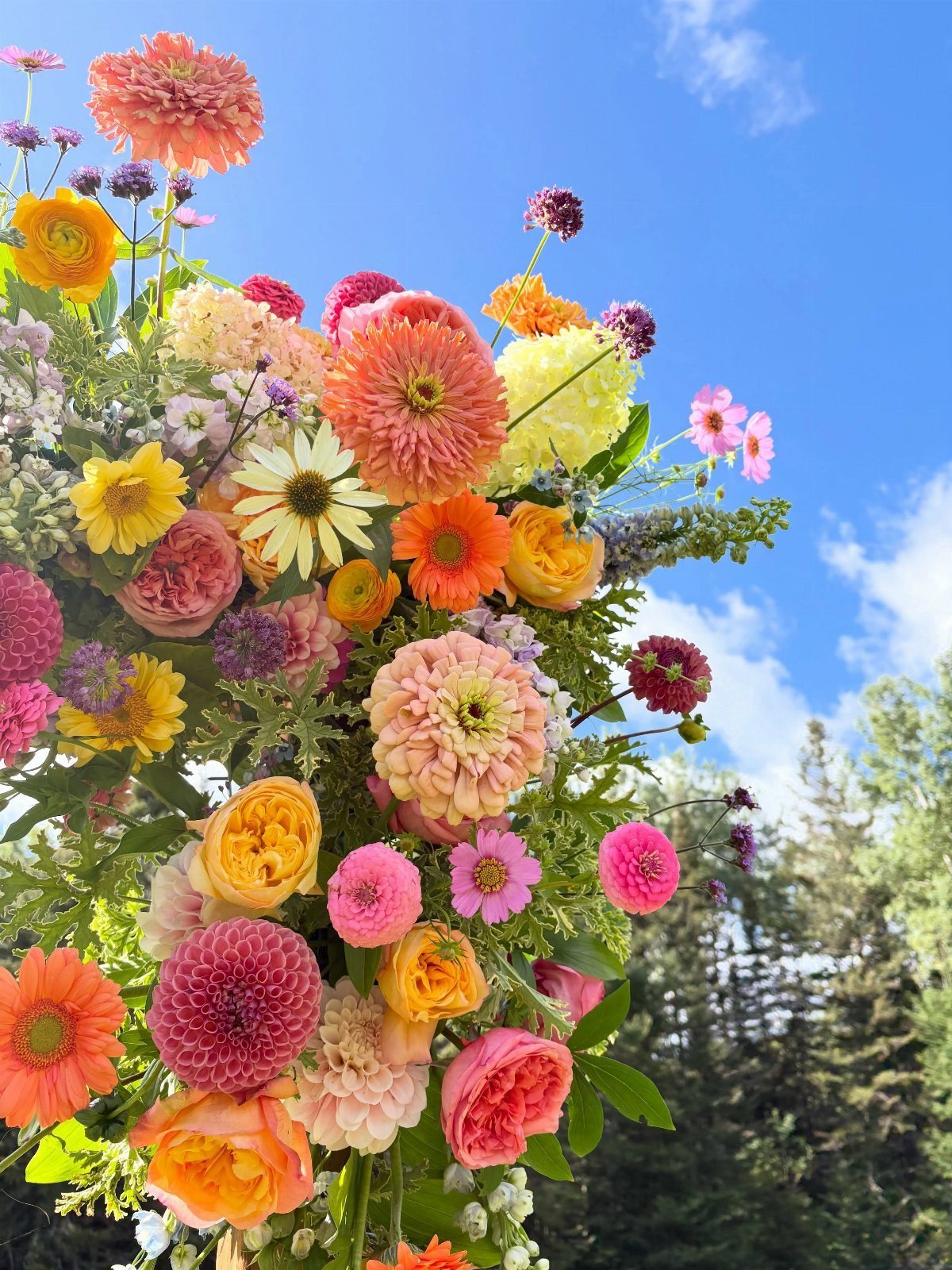
Roses, hydrangea, and delphinium are the backbone of most summer ceremonies for good reason: they show up fresh, hold color well, and your florist will not be scrambling to source them.
Choosing what is actually growing when you marry is the single easiest way to keep a floral budget from ballooning.
I planned a June wedding and still assumed peonies would be there; my florist gently steered me to garden roses that opened wider and cost less.
If your venue has greenery worth looking at, let the seasonal flowers echo it rather than fight it.
Summer arrangements with plenty of greenery work best when you keep the palette tight; against outdoor light and trees, two or three colors read as intentional, not busy.
2. Flower Arch
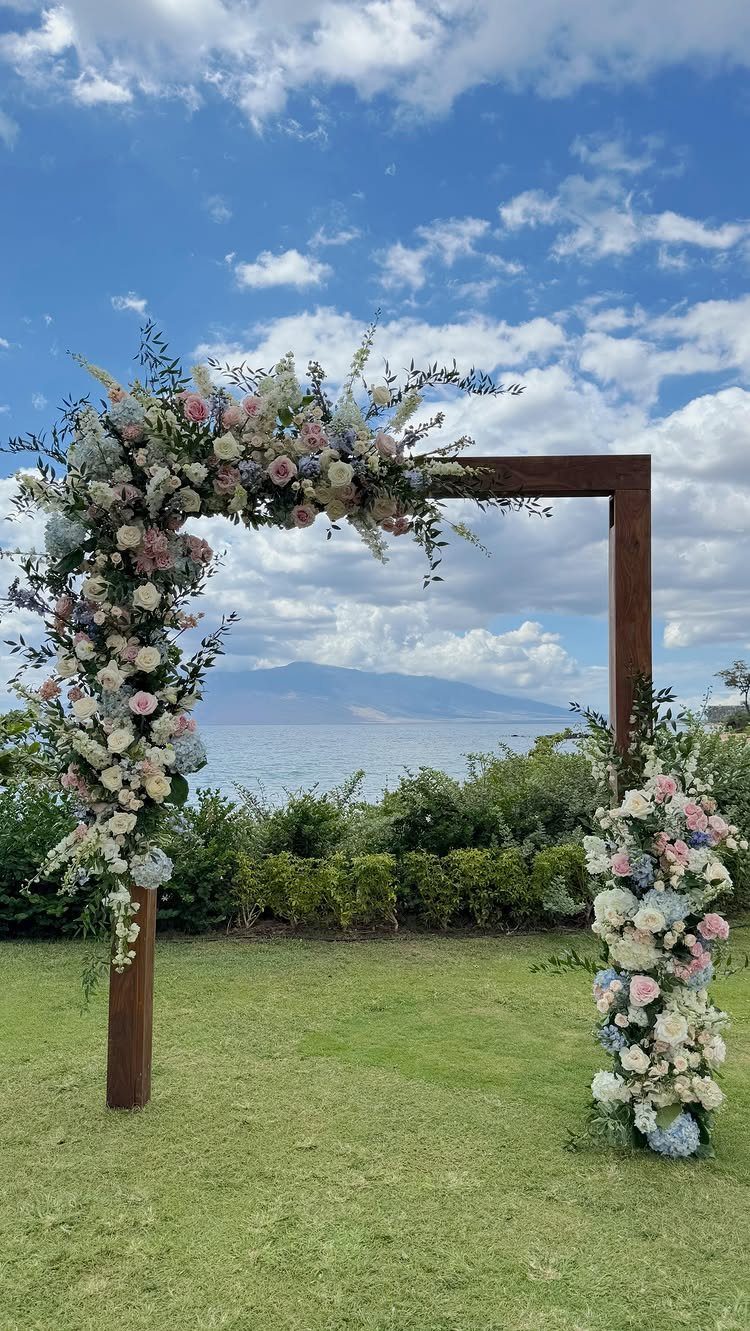
A wooden arch draped in blooms becomes the frame every guest stares at during your vows, so the flowers need to read cleanly from the back rows and in phone photos.
Pastel pinks and whites stay visible against bright outdoor light without competing with whatever sits behind them.
I sent my sister and a bridesmaid to a DIY guide when I could not afford full florist coverage for the arch. They spent hours wiring stems to the frame; the result was dreamy, but the time cost was real.
Lush coverage looks effortless only because someone put in the labor. Asymmetrical blooms or a mix of flowers and fabric draping both work; the question is whether you have hands to spare or a florist to hand it to.

PAKEAGE LIST: The wedding arch flowers include 1 x Large Flower Swag of 20"W x 36"H + 1 x Small Flower Swag of 16"W x 30"H + 4 x White Zip Straps of 11 inch + 4 x Black Clips of 2.2 inch (Not include arch stand and drapes)
3. Bridal Bouquet
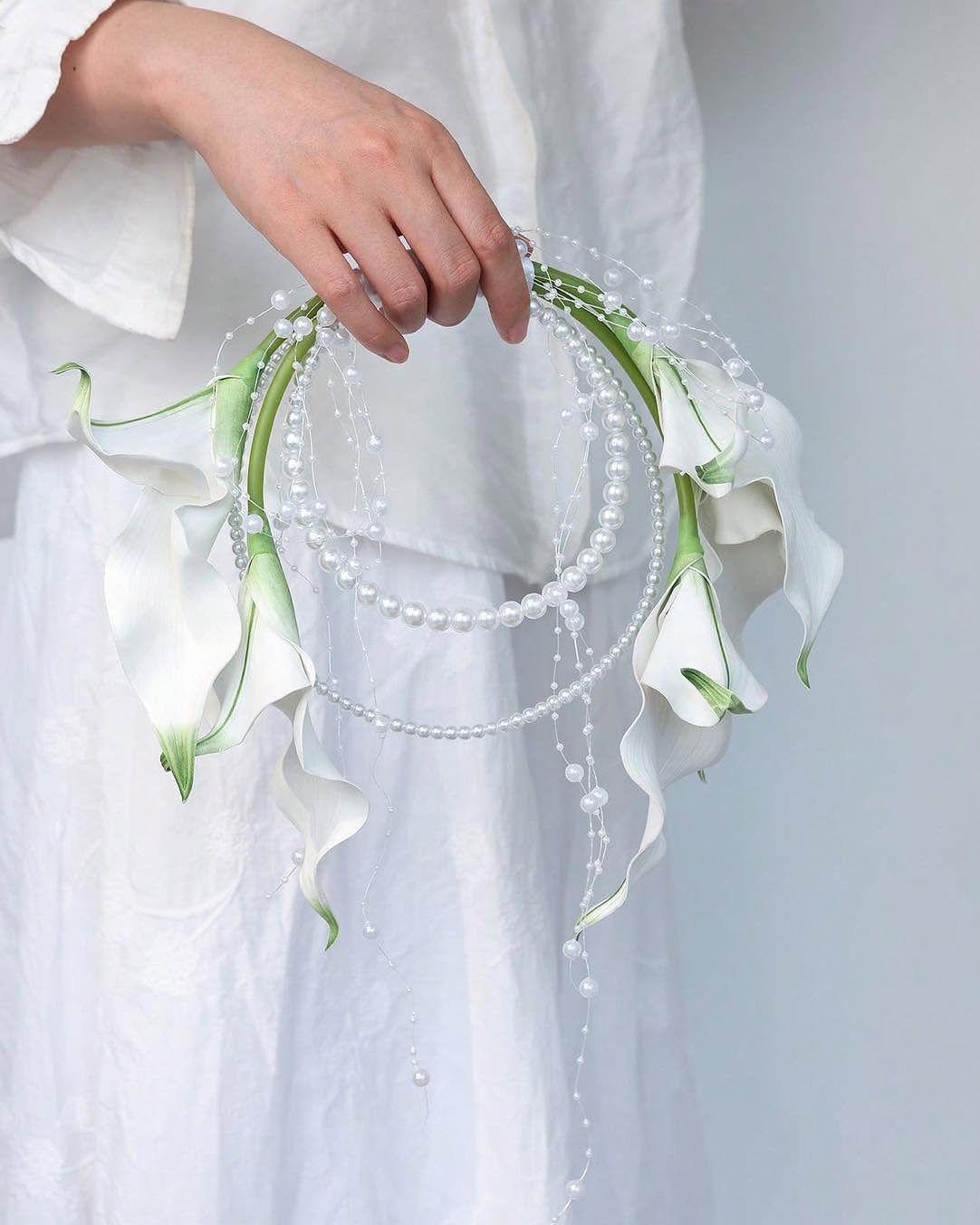
A circular frame reads as modern without trying hard, and the pearls add something no fresh stem can: they keep looking right after the flowers soften.
Your bouquet should trace the line of your dress.
A slim sheath pairs with something vertical; a full skirt can handle a rounder, lower shape. Roses, peonies, and orchids are the usual choices for a reason: they hold up out of water, take handling well, and photograph predictably.
If your palette is still open, ask your florist what is coming in strong for your date; a flower that is abundant costs less and looks fuller.
4. Aisle Arrangements
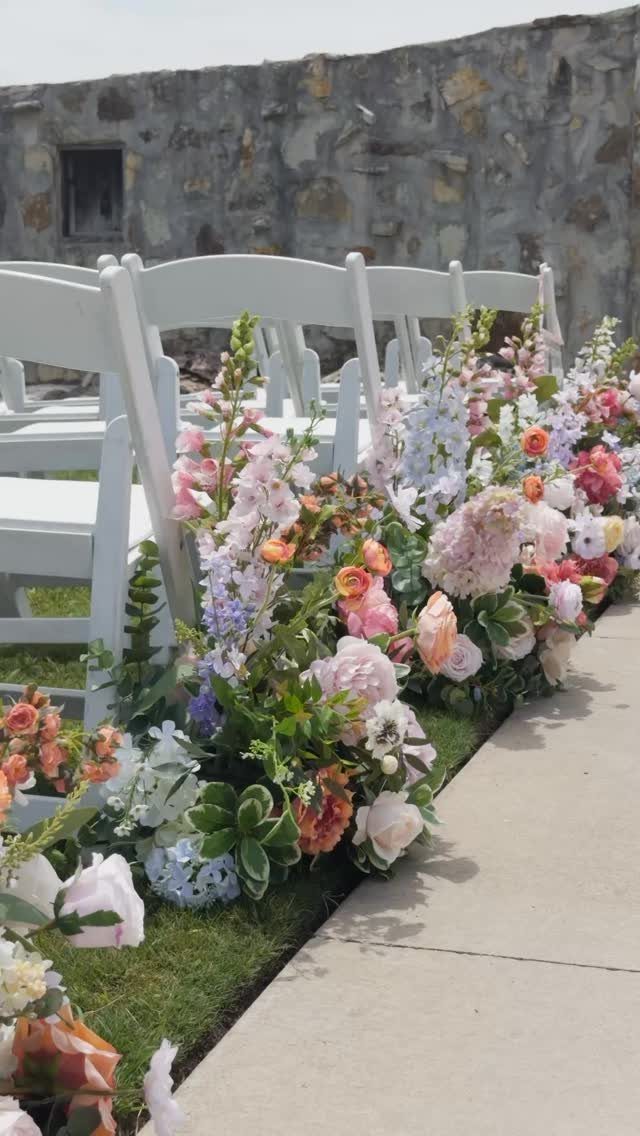
Shepherd hooks or ground-level clusters along the aisle edge turn the walk to the altar into something shaped, not just a path between chairs.
Keep aisle blooms low enough that seated guests see past them, not through them, which matters when everyone rises as the bride enters.
Attach to pews or chairs if your venue has them; for open ground, stakes or weighted containers keep stems upright through wind. Lisianthus and delphinium both give movement without density, which I favor for outdoor aisles.
They sway slightly, catch light, and keep the line from reading as a wall of color. Delphinium’s hollow stem bruises if handled roughly, so plan placement once and leave it.
5. Altar Arrangements
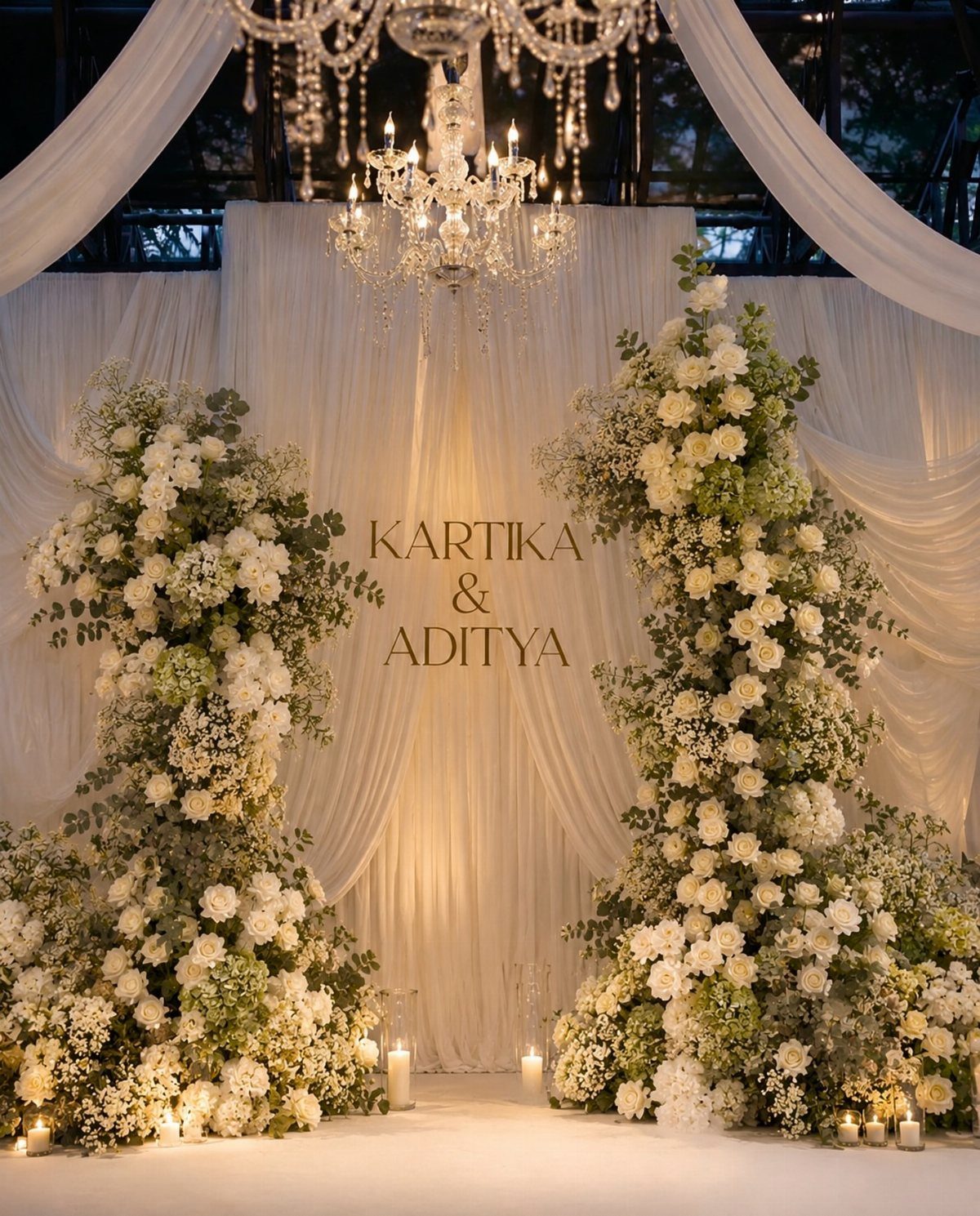
The flowers need to stand on their own in wide shots and not blur into the background when guests shoot video from their seats.
Low clusters suit intimate spaces where guests are close enough to smell the blooms; tall arrangements read better in caverns or tents where the eye needs something to land on above table level.
Either way, check with your officiant or site coordinator before committing; some religious venues restrict what can sit near the altar.
The practical bonus of altar flowers is their second life: moved to the reception, they cover entry tables or the sweetheart table without an extra rental.
Lisianthus and delphinium work here too if you want the altar to feel airy rather than arranged within an inch of its life.
6. Flower Girl Arrangements
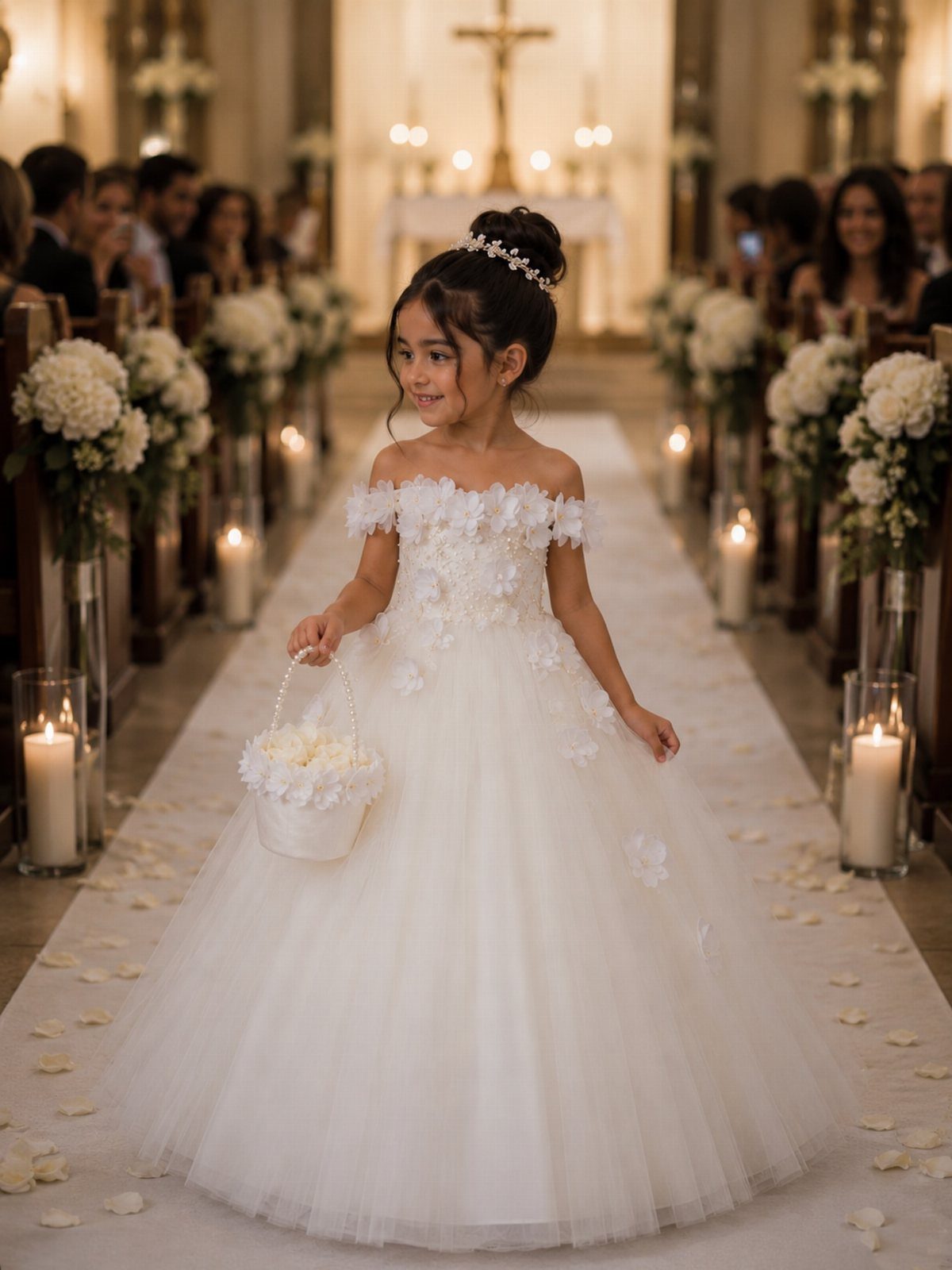
A basket of white petals is the classic for a reason: petals scatter without precision, which fits a small child’s motor skills.
But the options do not end there. A small posy bouquet or floral wand keeps the flower girl in the visual language of the wedding party, and either one photographs more deliberately than a half-empty basket.
Whatever you choose, keep it light.
Tulle dresses already restrict movement; adding weight to the hands slows the walk down the aisle. Coordinate with the bridal party flowers, but do not match exactly; a smaller or simplified version reads charming rather than costume.
Fill the basket about three-quarters: enough for the gesture, not so many that half stay in the basket once she’s walking.

【EXTRA STRONG FIXING ACCESSORIES INCLUDED】Comes with 8 cable ties and 8 clips for enhanced stability, ensuring secure installation on arches, backdrops, and stands...
7. Boutonnières
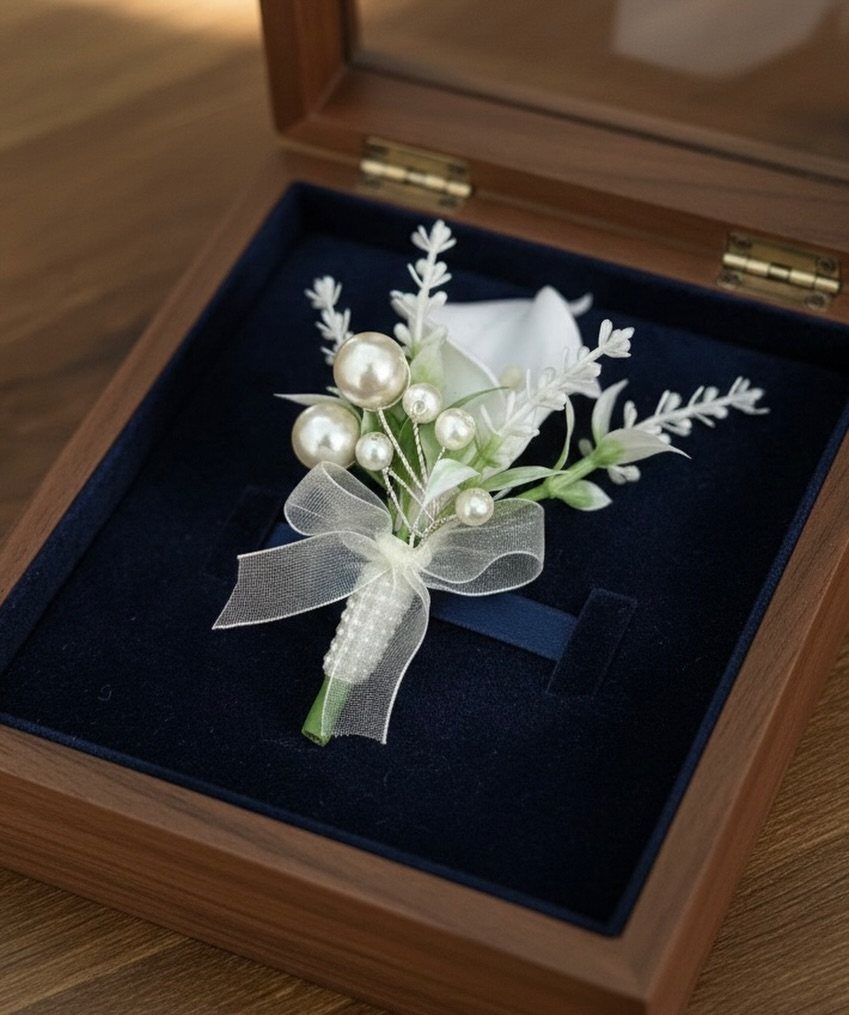
Small flowers pinned to a lapel keep the groom and his party in the same visual thread as the bridal bouquet without demanding much material.
A boutonnière with one calla lily, a few pearl accents, and a sheer ribbon bow reads formal without heaviness; the pearls stay crisp once the lily softens.
A sheer ribbon bow keeps the look light, and the navy velvet box interior photographs well against light and dark suit colors alike.
Check with your florist on pinning technique: the pin should anchor through the stem, not the flower head, or you will lose the bloom to movement before the first dance.
Usher, fathers, grandfathers, and ring bearer all wear these, so count carefully when you order.
8. Fabric-Draped Floral Backdrop
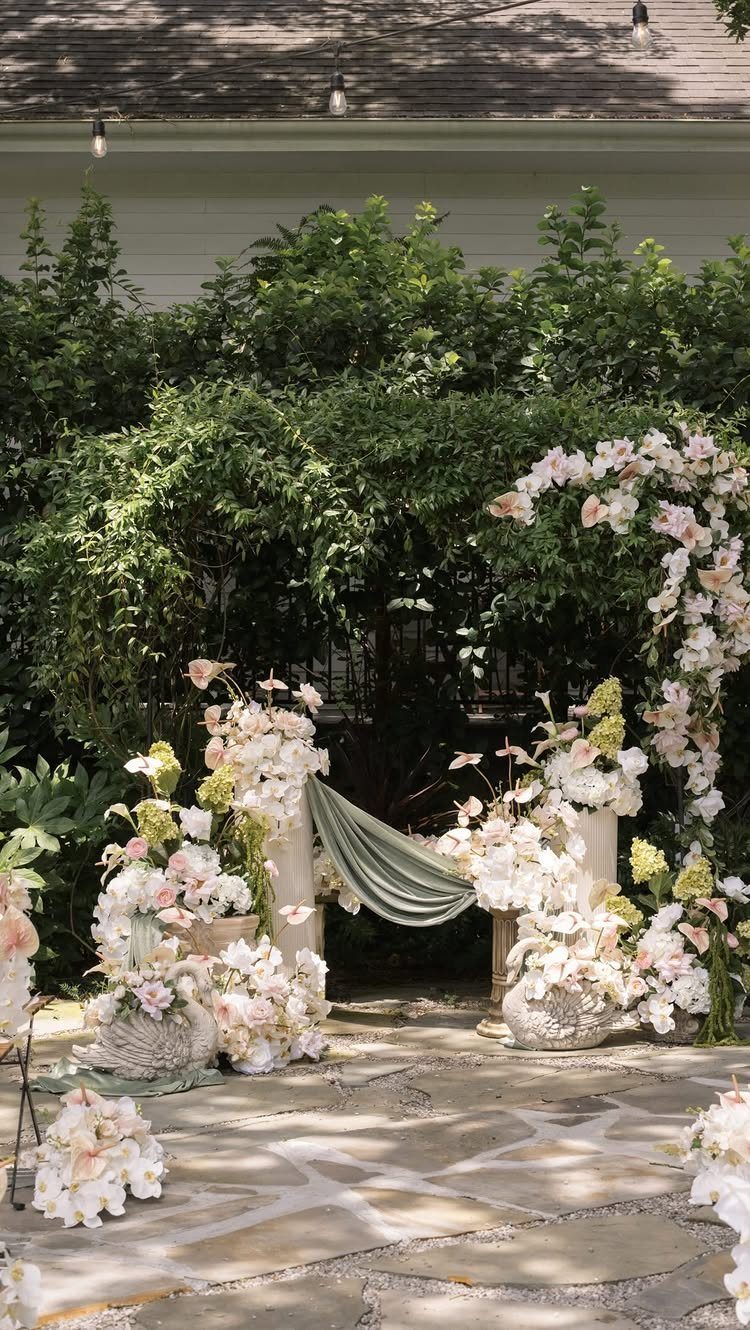
Clusters of white and pink blooms on pedestals joined by sage-green fabric turn a stone patio into an altar that reads as one continuous shape rather than separate pieces. The fabric does the stretching; the flowers do the focusing.
Wind is your enemy here.
Fabric catches it, and pedestal bases need real weight if guests are seated on open ground. Swan planters like these suit hardscaped venues: think terraces, patios, or gardens with stone edges rather than loose lawn.
Check that your fabric yardage has enough drop to puddle slightly; too short and it reads as hung, too long and guests trip. The soft green avoids competing with whatever foliage sits behind.
9. Floral Cross Backdrop
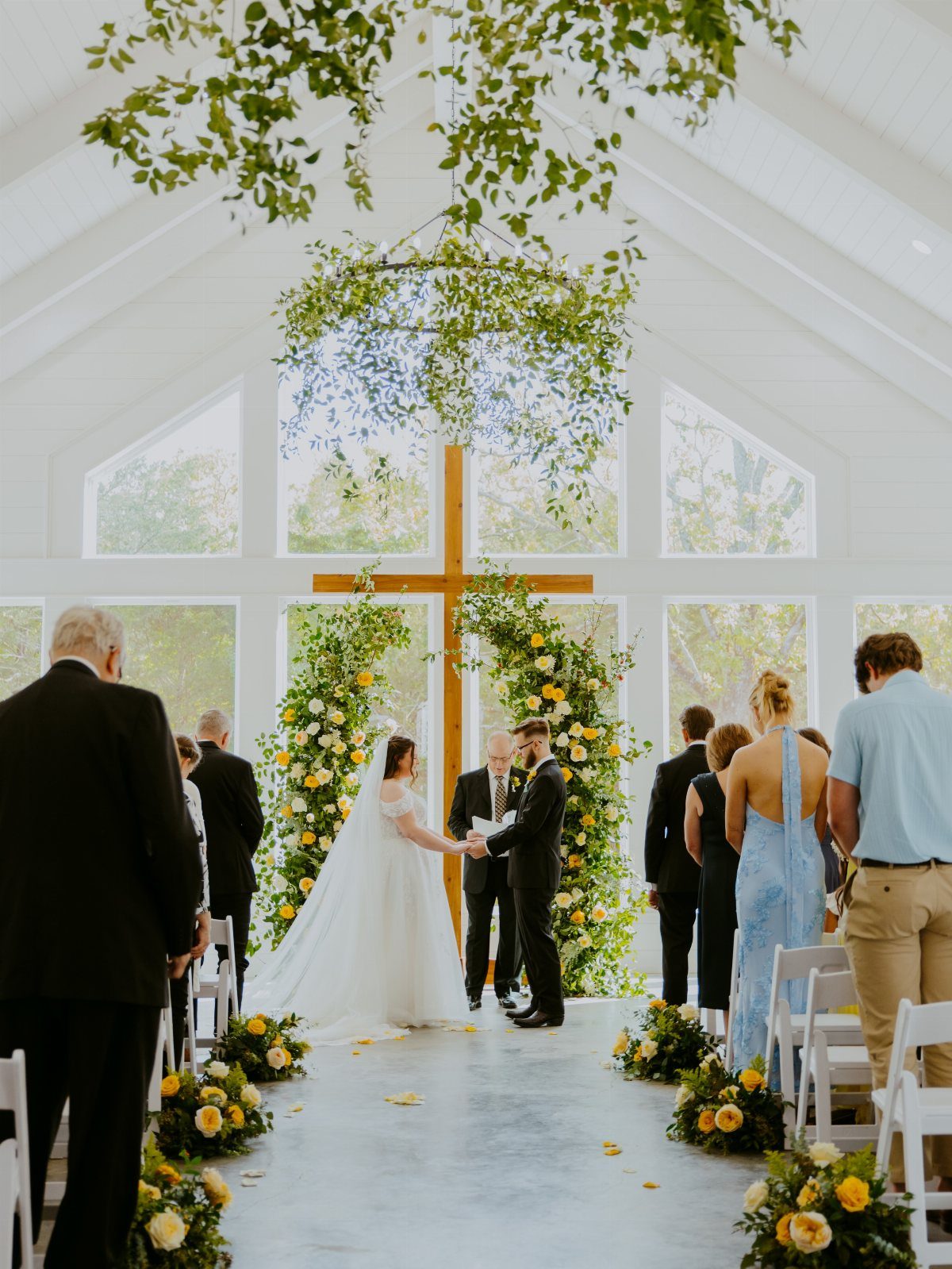
A wooden cross framed by yellow and white floral arches gives a chapel ceremony its focal point without adding a structure that competes with existing architecture.
The flowers here follow the horizontal and vertical lines of the cross rather than masking it.
Ask your officiant or venue coordinator about restrictions before you commit. Some chapels limit what can stand near or be attached to the cross; others provide their own cloth or require specific dimensions.
The mood this sets is warmth and light: yellow reads joyful in indoor light that can otherwise flatten color.
If your chapel has strong stained glass, pull one tone from it rather than introducing something unrelated. The floral arches here stay separate from the cross itself, which may matter if attachment rules apply.
10. Bridesmaid Bouquets
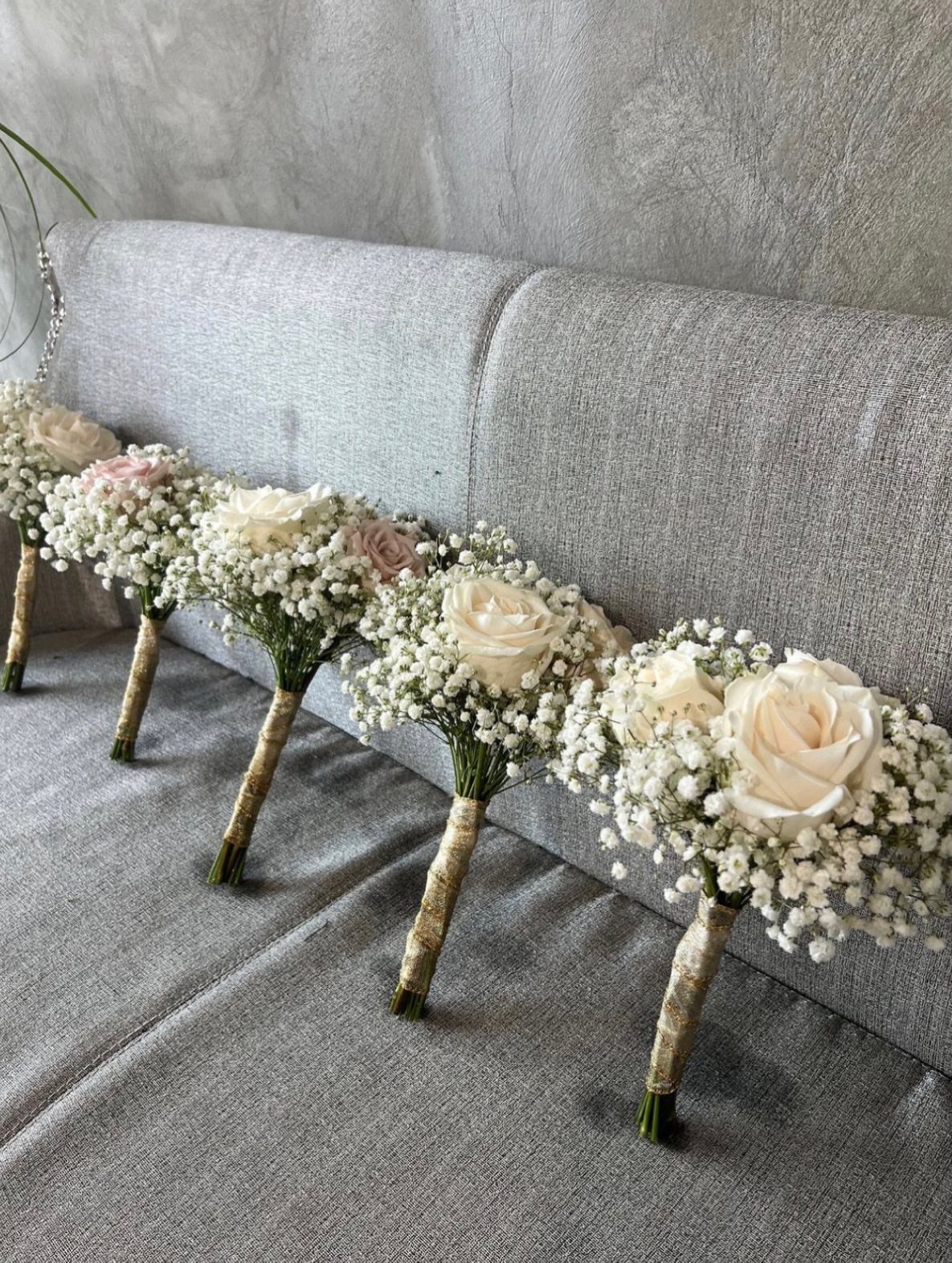
Smaller versions of the bridal bouquet keep the wedding party unified without each bridesmaid carrying something that overwhelms her frame or the photos.
Five to fifteen stems per bouquet is the practical range; tight budgets land on the low end and still photograph as intentional.
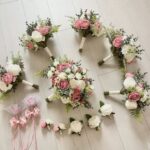
Gold-wrapped stems tie the look together when dresses vary slightly in shade or cut. White roses and baby’s breath give each bridesmaid something light enough to hold through a long ceremony and the photos after.
Coordinate without matching exactly: one fewer rose, or a slightly tighter shape, keeps each bouquet from reading as stamped out. They will carry these for hours, so weight matters as much as look.
11. Ground Floral Nest
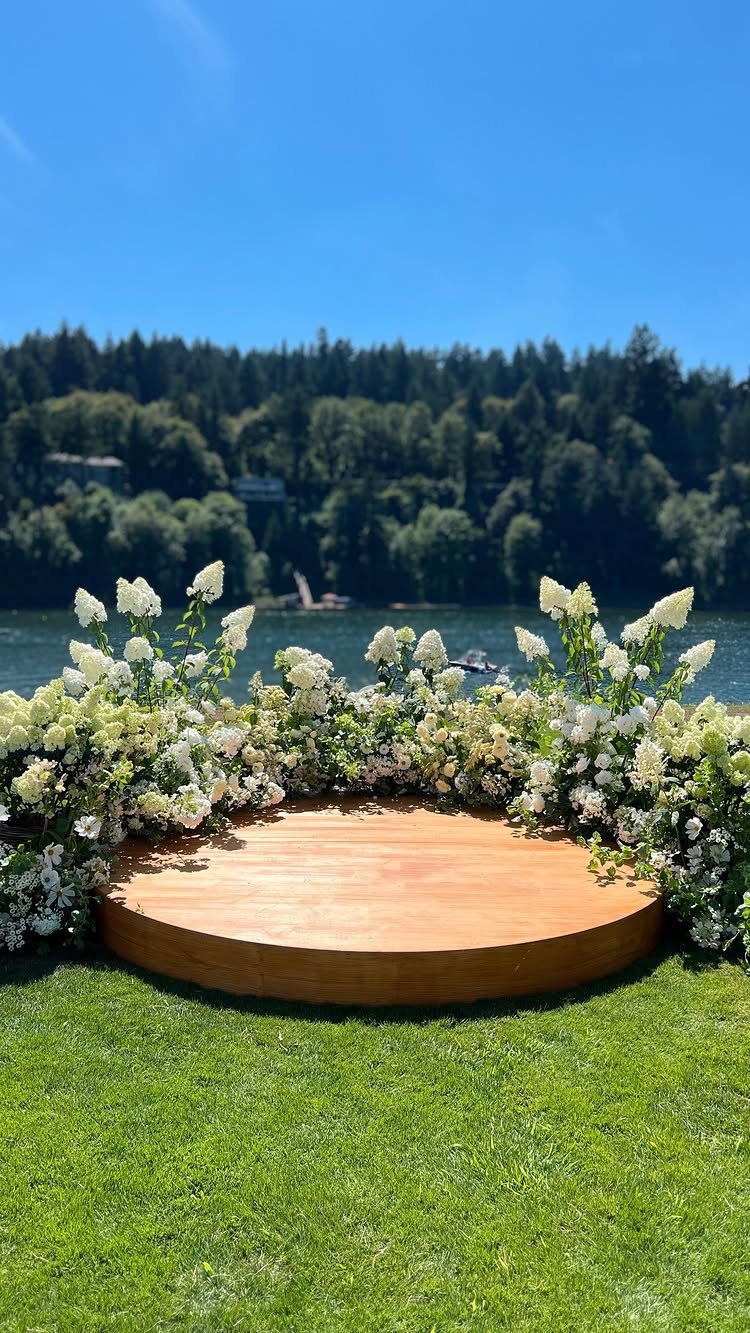
A ring of white hydrangeas and roses at ground level turns an open platform into a ceremony space with a natural boundary, no structure above eye height needed.
This suits lakeside or lawn venues where the view behind the couple is the point and a tall arch would block it.
I build these from the outside in: a ring of greenery first, then blooms tucked in where they’ll show from the aisle and the altar both.
The stems stay visible from guest level but not in photos shot from behind; plan placement once and leave it.
Hydrangea heads bruise if moved repeatedly, and their water demand is high: a soaked foam base under the arrangement keeps them crisp through a hot afternoon.
The ground nest reads lush from the aisle but does not rise to interrupt sightlines.
12. Floral Chuppah
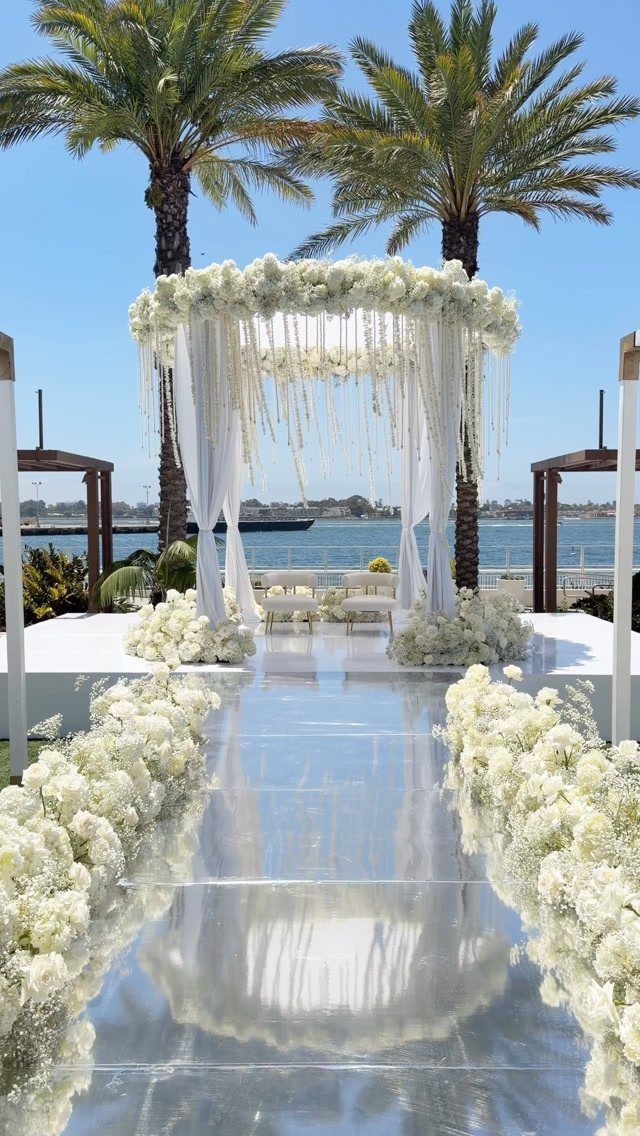
4 poles and a canopy give Jewish wedding tradition its central structure, and floral coverage turns the chuppah into the ceremony’s visual anchor. Corner accents work if budget is tight; full coverage with cascading greenery reads more formally.
The canopy fabric matters as much as the flowers.
Heirloom cloth or family embroidery carries weight this structure is meant to hold. Check that your florist designs for wind: open sides mean the canopy moves, and heavy blooms can strain the poles.
White flowers against water and palm trees, as above, keep the palette clean in bright outdoor light. Whether you use fresh or add some permanent stems, the chuppah stands as the home you build together; the flowers announce it.
Choosing Flowers for Your Theme
The same pink reads romantic in a garden roses arrangement and modern in an orchid cluster; what shifts is the shape and texture, not the color alone.
Your florist can pull a mood from a photo of your dress, your venue, or a single swatch.
I bring my florist a fabric sample or a plate from the rental company rather than a flower name; they name what is in season that carries the same weight.
Most weddings use personal flowers, ceremony flowers, and reception flowers, and no rule says you need all three. Decide which moments are non-negotiable and let the rest flex around your budget.
Importance of Floral Arrangements
Floral arrangements set the tone before a guest speaks to anyone. They are the first visual statement of what the day will feel like, and they do this through scale and placement more than through any single bloom.
A piece that looks lovely at arm’s length can disappear in a wide shot if it is too small for the space; oversized florals in an intimate room read heavy without enough breathing room around them.
Wedding ceremony floral design is about proportion, negative space, and how each piece connects to what sits beside it.
Impact of Venue on Flower Choice
Venue comes first. What fills a ballroom smothers a coastal lawn, and what suits a chapel gets lost in a hotel atrium.
Wind and sun mean outdoor arrangements need bulk and tougher stems. Wind, heat, and direct sun punish delicate blooms fast, so the design has to hold through the ceremony window.
Roses, lisianthus, and hydrangea handle this better than stems that bruise at the first gust. A high-ceilinged space needs mass to match it; an intimate room looks cluttered fast, so fewer and cleaner pieces work better.
Pale colors disappear against some walls and linens; deeper tones or stacked greens give ceremony flowers enough pop without looking loud. Check your venue’s natural palette and decide whether to echo it or contrast.
Planning Floral Arrangements
Book your florist before you think you need to, and bring a list that runs past the obvious to the pieces you haven’t pictured yet.
Aisle florals that become bar accents, welcome pieces that move to the seating chart; repurposing ceremony flowers into the reception stretches the budget without lessening the design.
The strongest ceremony arrangements are built knowing people will walk past them, stand beside them, and see them from behind.
The ceremony gets its full look, and the reception gets coverage it did not pay for twice. Ask your florist which stems travel well and which wilt fast; not every bloom survives a move across the venue.
Knowing where each piece goes twice makes the decisions easier, since every arrangement earns its keep in both halves of the day.
Frequently Asked Questions
What flowers do you need for a wedding?
The floral list breaks into 3 chunks: whatever you and the wedding party carry or wear, whatever frames where you actually say your vows, and whatever greets guests or sits on tables once the party moves.
Most weddings use all three, but no rule says you must.
How to choose the best wedding ceremony flowers?
Start with your venue, then match scale and durability to the space. Wind, heat, and sun outdoors mean tougher stems and bulkier shapes; grand indoor rooms need enough visual weight not to disappear.