This spring cake list runs from a $300-range loaf that feeds a small crowd to tiered showpieces whose separator rings and hand-piped Lambeth details push well past $15 per slice.
A semi-naked rustic cake sits right on wood tables beside wildflower tumblers, while a blue-and-white Chinoiserie fondant cake needs something else on the table carrying that cobalt through; the setting shapes the choice more than any color story board ever could.
1. Rhubarb Cake
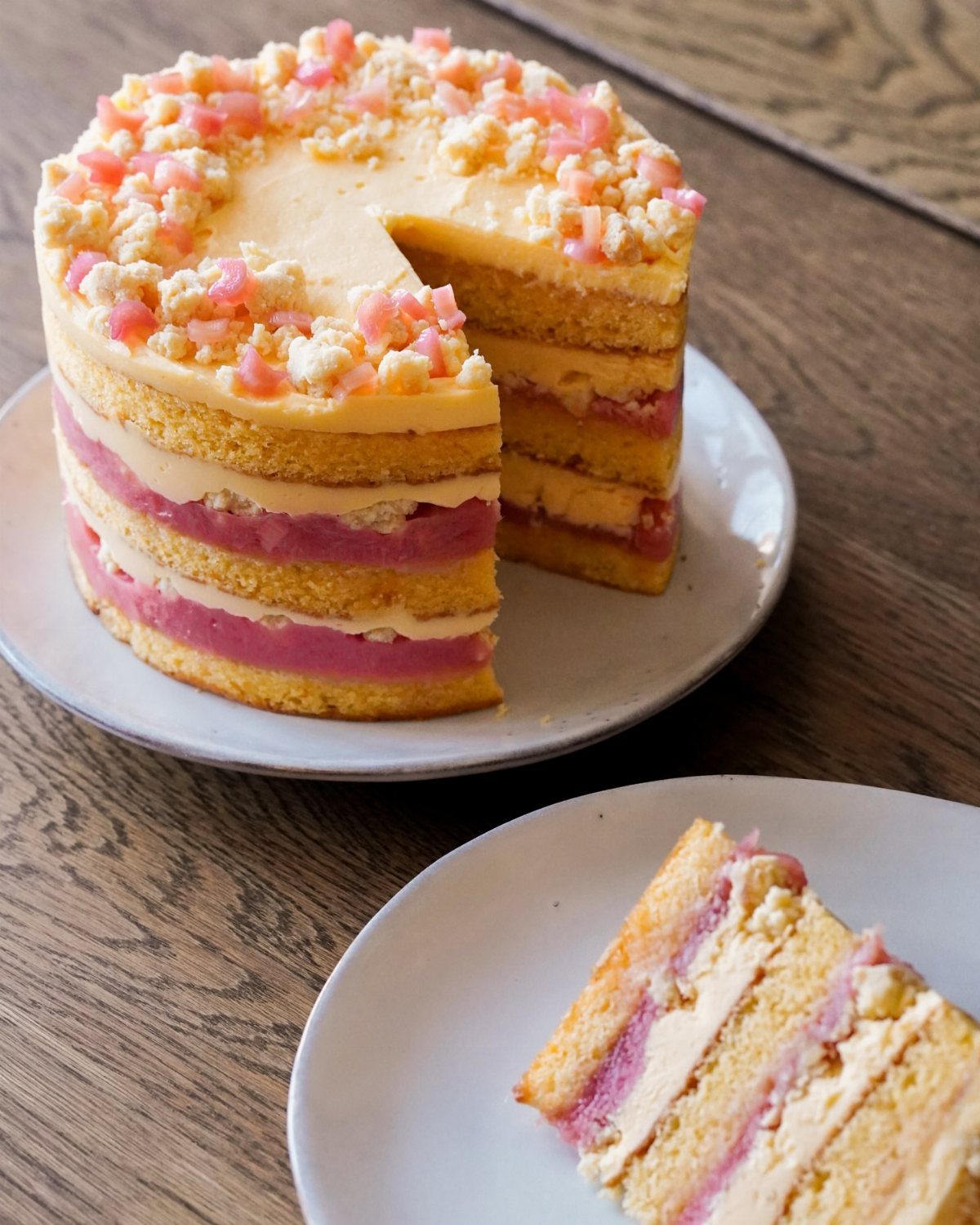
Pink rhubarb folded through yellow sponge and custard cream gives you a spring flavor that reads as dessert, not just decoration. The visible layers mean your baker needs a firm-set custard; too loose and the filling squeezes out when sliced.
Ask to taste the rhubarb compote on its own. Some bakers cook it sharp, some add more sugar than you want on an already-sweet cake.

Natural aluminum’s superior heat conductivity ensures consistent, evenly browned results every time you bake
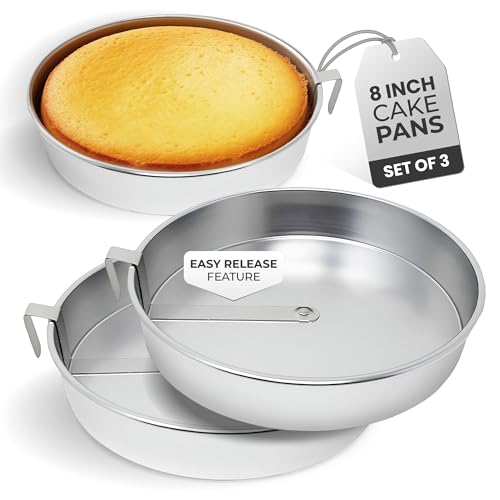
Easy and Fun Cake Removal – Releasing cake from a pan shouldn’t be frustrating. Make it easy with these nonstick cake pans! Designed with a built-in swivel blade, our easy-release cake pans let you remove your perfectly shaped cakes with ease.

PERFECT FOR MAKING ALL YOUR FAVORITES like cheesecake, mousse, quiche, coffee cake and any similar recipe where you can't turn the pan upside down to remove the cake. These pans can be used to create beautiful three layer cakes suited for any occasion.
2. Floral Spring Cake Designs
Fresh or sugar flowers that echo your bouquet turn the cake into a bridge between ceremony and reception. Sugar blooms cost more but travel safely; fresh ones need your florist and baker to coordinate on food-safe stems and placement.
Peonies and garden roses hit peak season in late spring, so their price and availability work in your favor for May and June dates.
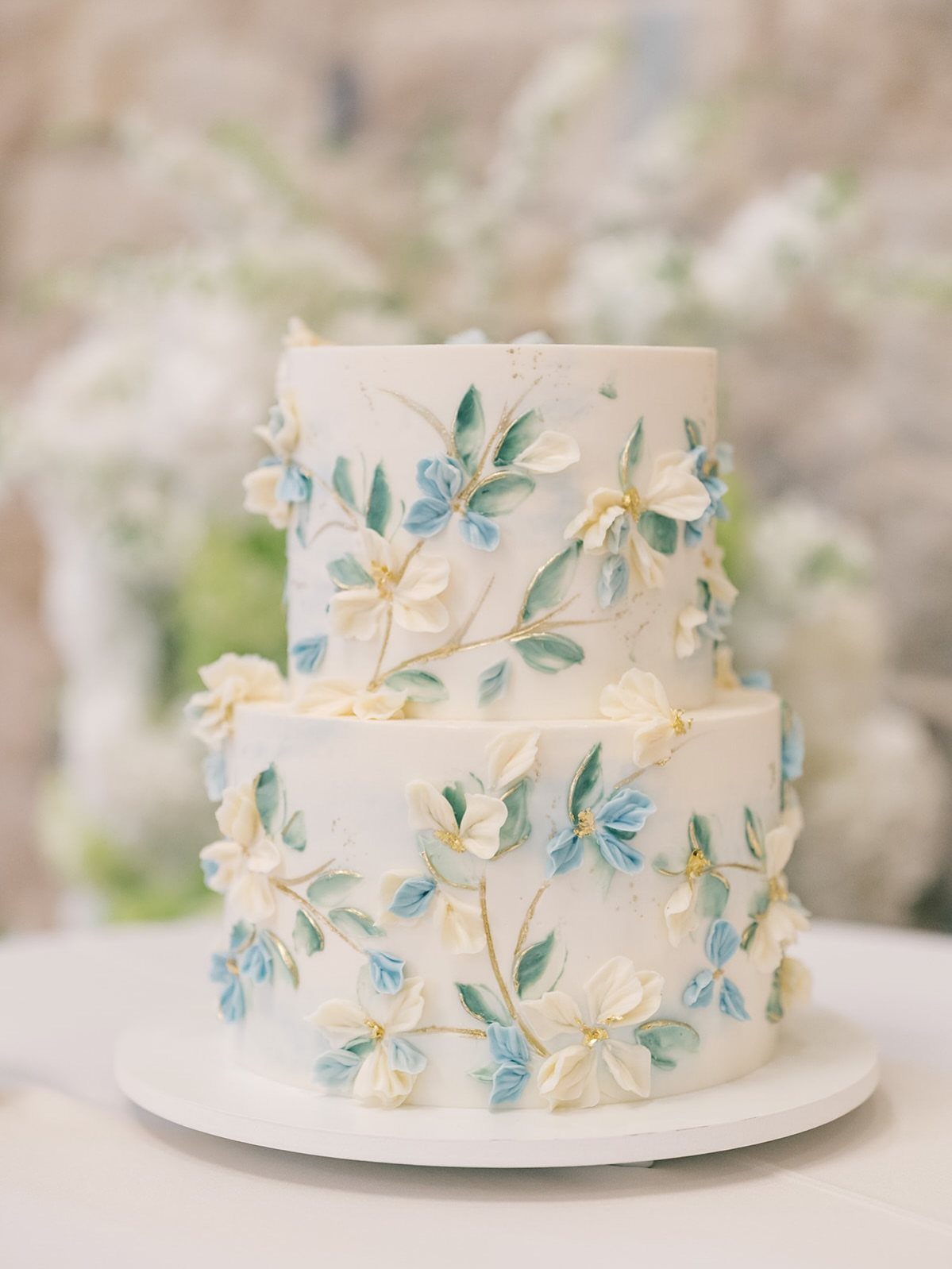
Painted flowers work best when the strokes stay loose and impressionistic, soft blush or blue that suggests blossoms without trying for botanical accuracy. A little gold leaf catches natural light without reading as glitter.

3-Tier Cake Floral Arrangement: Designed specifically for standard 6/8/10-inch 3-tier wedding cakes, the three floral arrangements scale progressively with the cake tiers. Utilizing low-saturation soft colors, blending spring hues like red pink blue and green, it creates a dynamic effect of flowers surrounding the cake

【Package Included】48 pcs butterfly wall stickers: 12 pcs Style 1, 12 pcs Style 2, 12 pcs Style 3, 12 pcs Style 4, each style has 3 sizes(3", 4", 5"). Coming with 48 pcs double sided adhesive dots.

🌼Wildflower Dessert Plates Set: Our wildflower party supplies include 50pcs of 7-inch floral dessert plates, perfect for serving up to 50 guests at celebrations and gatherings.
3. Pressed Wildflower Cake
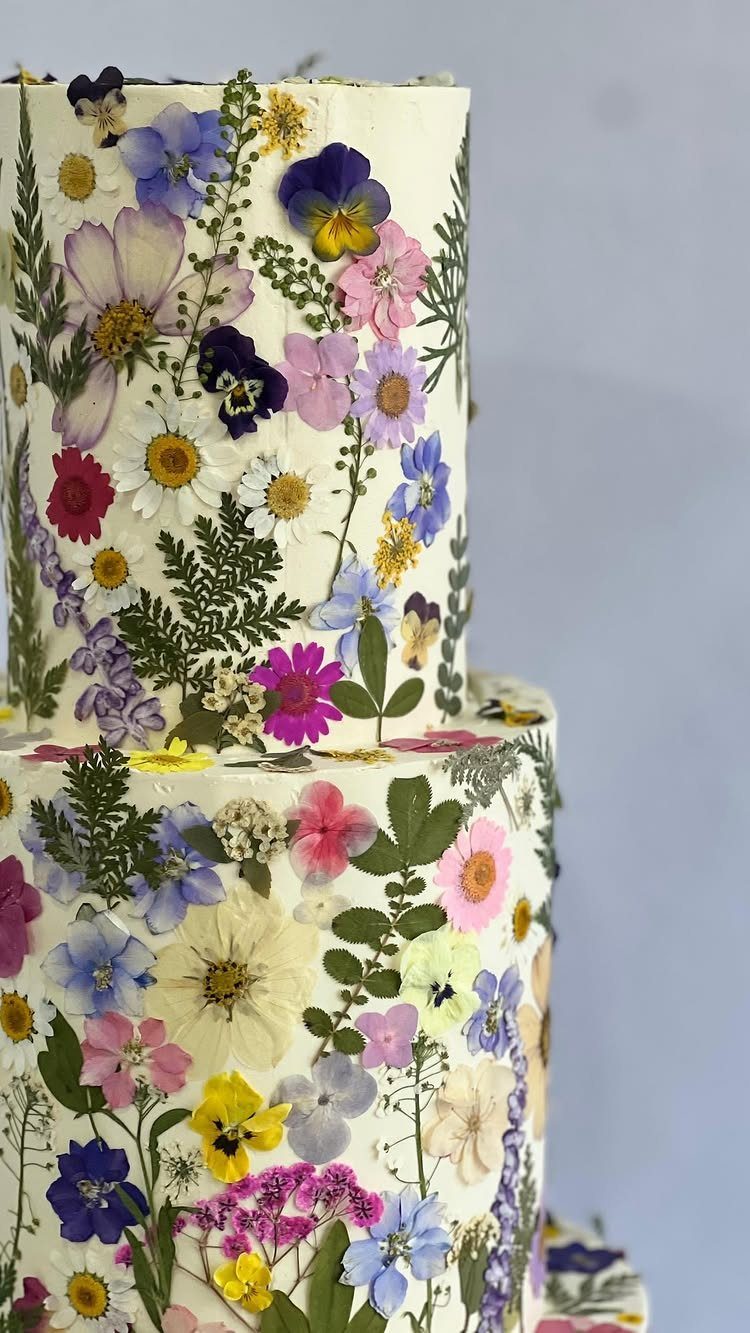
Pressed wildflowers pressed flat against white buttercream read as botanical art when the placement is intentional rather than scattered.
Clusters of pressed flowers need their layout planned before anything touches the buttercream, not scattered in a last-minute dusting. Lemon or elderflower cake flavors keep the whole thing light enough to match the visual.
If you are ordering pressed blooms yourself, source food-safe or pesticide-free; the decorative ones sold for crafts often carry sprays you do not want against frosting.

Set Contents: The flower cake decoration set includes 24 natural dried flowers in soft pink, purple, white, and yellow hues. The DIY-specific cardstock measures 11cm/4.3in × 8.5cm/3.3in. Each dried flower retains its original shape and natural coloration, offering unique texture to suit diverse decorative arrangements

Cake Decoration with Real Edible Flowers: 50 Pcs Wildflower Cake Toppers, including over 36 real dried pressed flowers—from chrysanthemum, cherry blossom, to gypsophila, little daisy, and more—plus 14 edible butterflies for a true wildflower-summer vibe on your cake

Charming Wildflower Design : Elevate your celebration with our enchanting Wildflower Cake Topper, perfect for creating unforgettable moments at birthdays, baby showers, and floral-themed parties. These beautiful flowers cake decorations will impress your guests and delight your little ones!
4. Lambeth-Style Pastel Vintage Cake
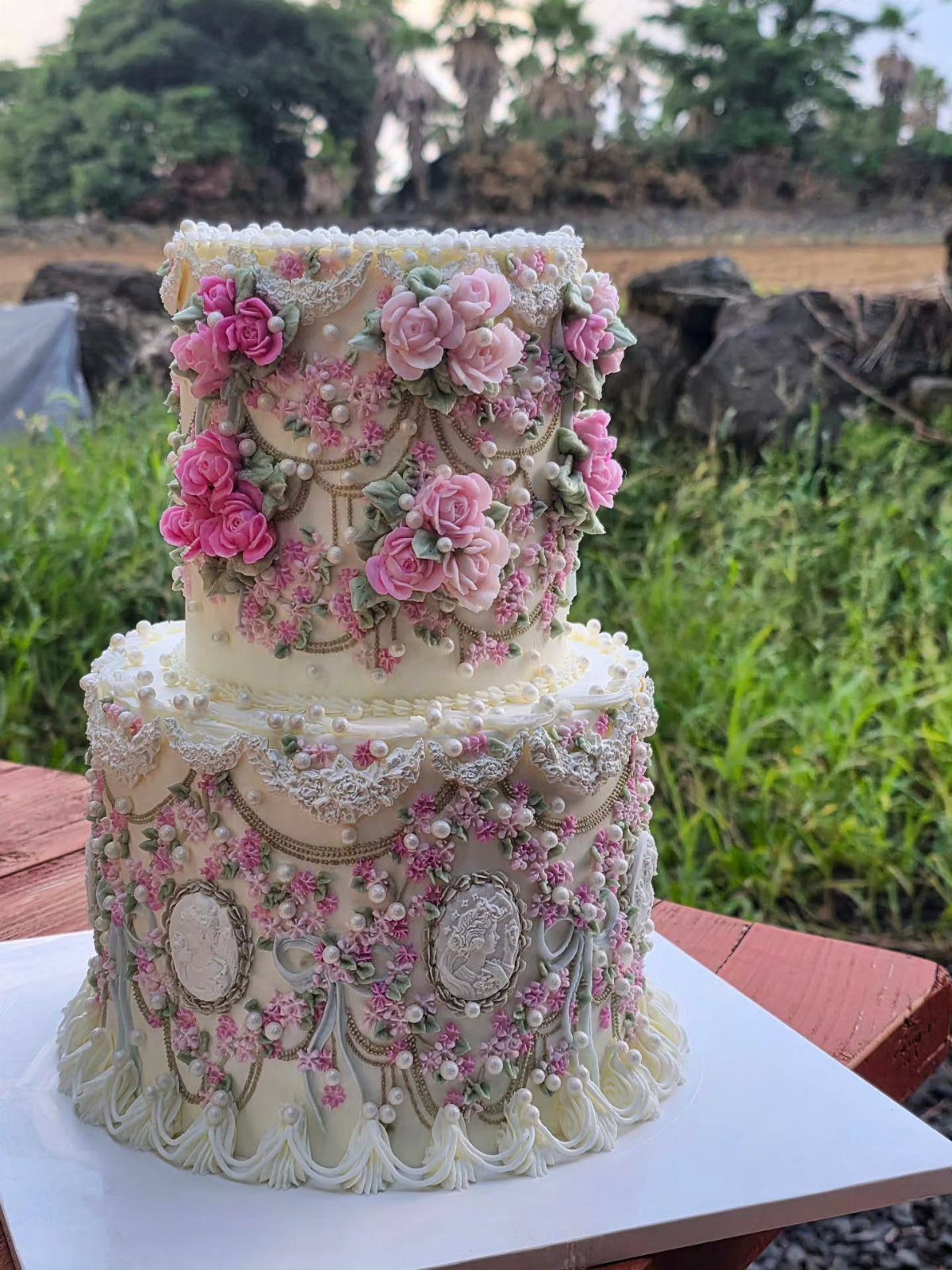
Lambeth piping builds nostalgia with real weight: swags, shells, ruffles, and pearl details that took hours by hand. The spring version softens the look with pastel pink, butter yellow, or pale blue instead of the traditional heavy white.
2 tiers carry this much ornament well; more tiers would drive up cost and visual density past what most modern weddings gain from.
Ask your baker about a heart-shaped tier or a bold bow if you want to push past pure vintage into something current.

Affordable Piping Bags Combo: Package include 100 x disposable pastry bags, 1 x silicone pastry bags, 12 x stainless steel decorating tips, 3 x plastic scrapers, 1 x frosting couplers, 2 x piping bag ties. No matter your pro or novice, this affordable pack could meet your need.
5. Blue-and-White Chinoiserie Cake
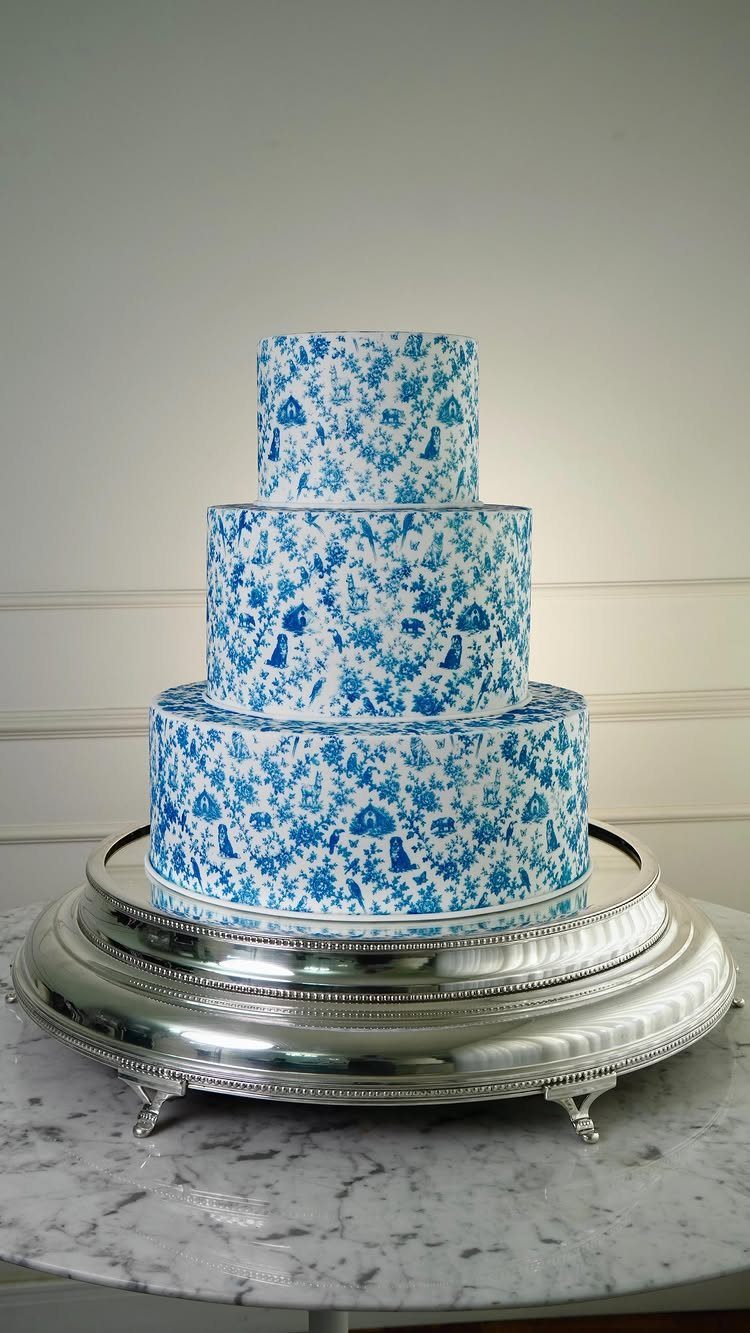
Cobalt blue florals and vine patterns on white fondant give you the same satisfaction as blue-and-white porcelain without collecting dust.
Your tablescape matters here. This style photographs best when something else on the table carries the blue through: napkins, plates, or a runner.
Standalone, it risks looking like the one formal element at a relaxed reception. Lemon-blueberry or almond with fruit filling makes sense with the color story.
6. Rustic Spring Cake
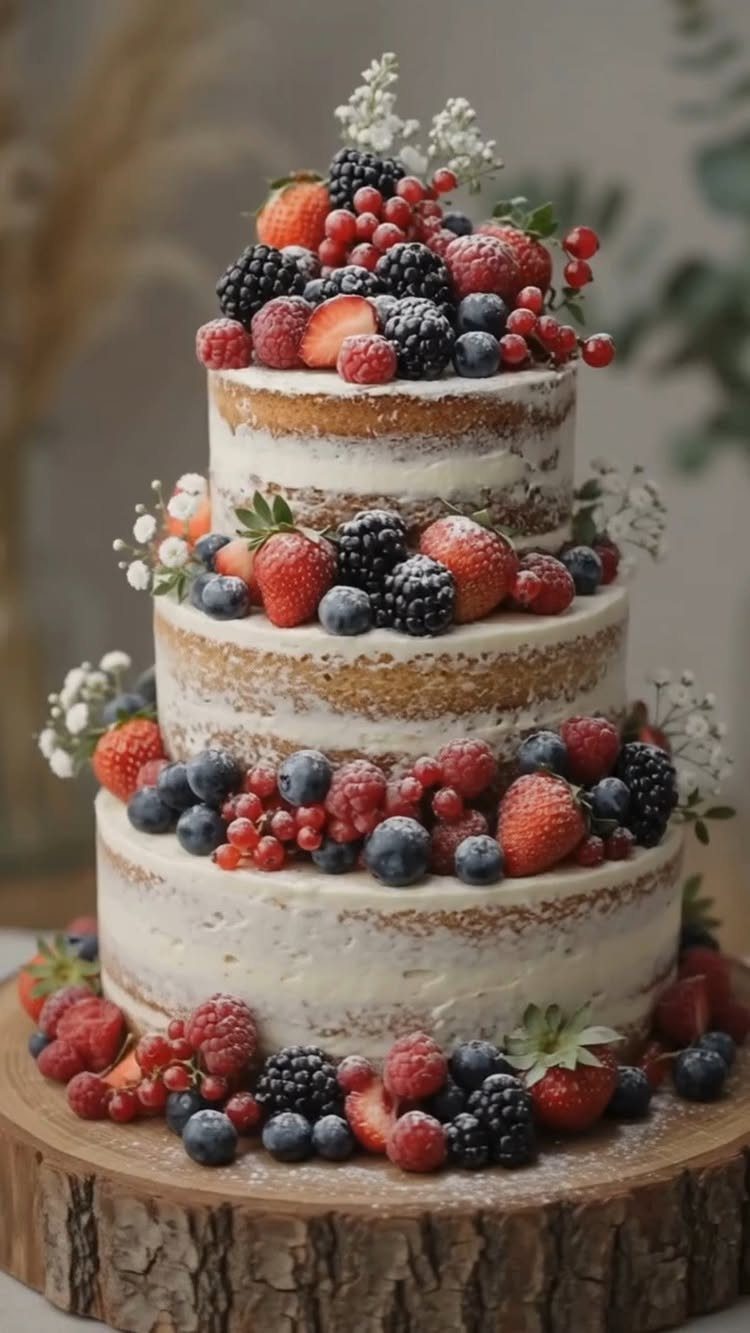
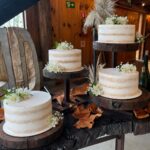
A semi-naked cake with the sponge barely covered lets berries and tiny white flowers do the visual work instead of frosting.
The risk is reading unfinished rather than intentional, which is why the wood slice stand and the symmetry of the berry placement matter.
This style suits a wedding where the whole reception carries that relaxed, dinner-party feel: wood tables, wildflowers in tumblers, no rented chiavari chairs. If your venue is a ballroom or a hotel, the cake may clash rather than stand out.
The baker needs a moist, dense cake; light sponge dries out fast with this little buttercream protection. Chocolate or carrot cake holds up; vanilla butter cake usually needs more frosting coverage to stay edible through a long reception.
7. Pearl Cake
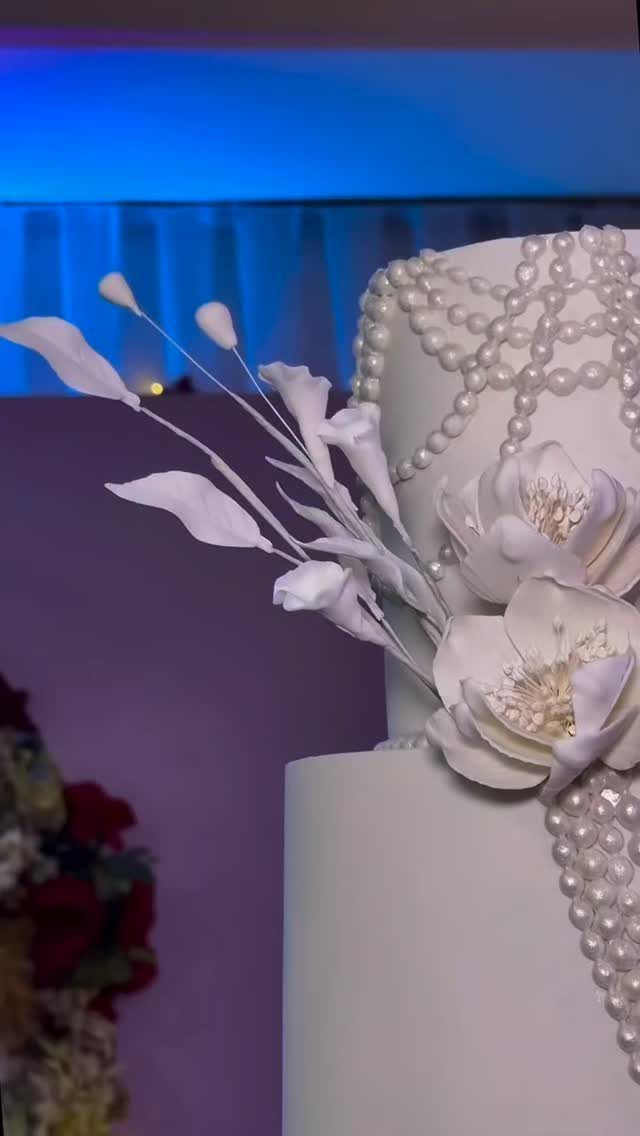
Draped pearl strands and clustered sugar pearls turn a white tiered cake into something that carries light rather than just reflecting it.
The monochrome palette keeps the look from reading as costume jewelry; one floral accent, if you want any, is enough.
Champagne cake, raspberry filling, or vanilla bean all fit the classic tone without fighting the visual. Sugar pearls need careful placement, each one adhered so they do not detach onto plates during service.
Ask your baker how the strands attach tier to tier, especially if the cake will travel. The texture and shine will show in photos without needing any color at all.

Complete 3-Tier Wedding Cake Toppers Set: This pack includes 3 individual floral cake topper arrangements of varying sizes (Length from 12.6"/32cm to 13.4"/34cm, width from 3.54”/ 9cm to 6.3’/ 13cm). Specifically designed as a wedding topper to decorate the top, middle, and bottom tiers for a professional wedding cake decorations look
8. Sculptural Edible-Art Cake
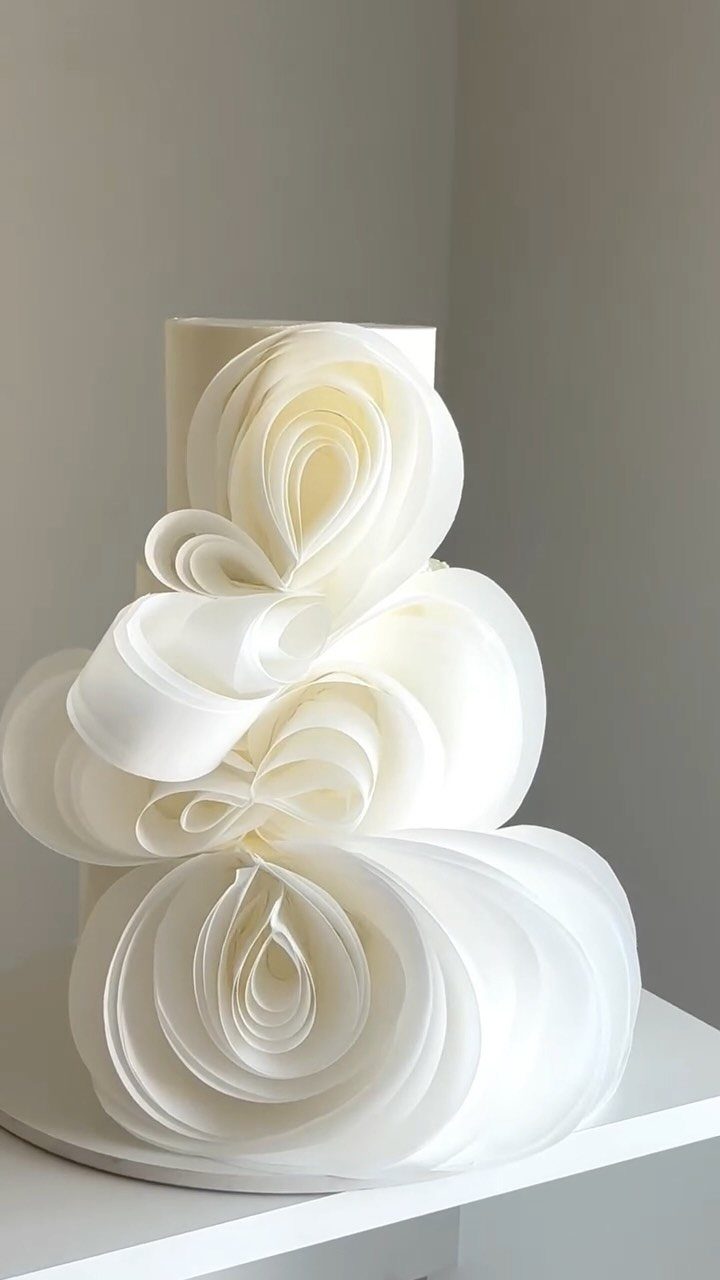
Curved tiers and asymmetrical shapes read as gallery piece before they read as dessert, which is exactly the point for couples who want the cake to start conversations.
Spring versions stay in ivory, blush, pale blue, or butter yellow rather than pushing toward bold color; the shape itself carries the interest.
Wafer-paper ruffles or bas-relief textures add shadow without adding weight. Keep the surface details minimal, one texture choice per cake, and let the silhouette do the work.

Wildflower Cake Toppers: Featuring a stunning wildflower design, these floral cake toppers will create a touch of natural beauty and spring floral vibe, making them ideal for...
9. Long Table Sheet Cake
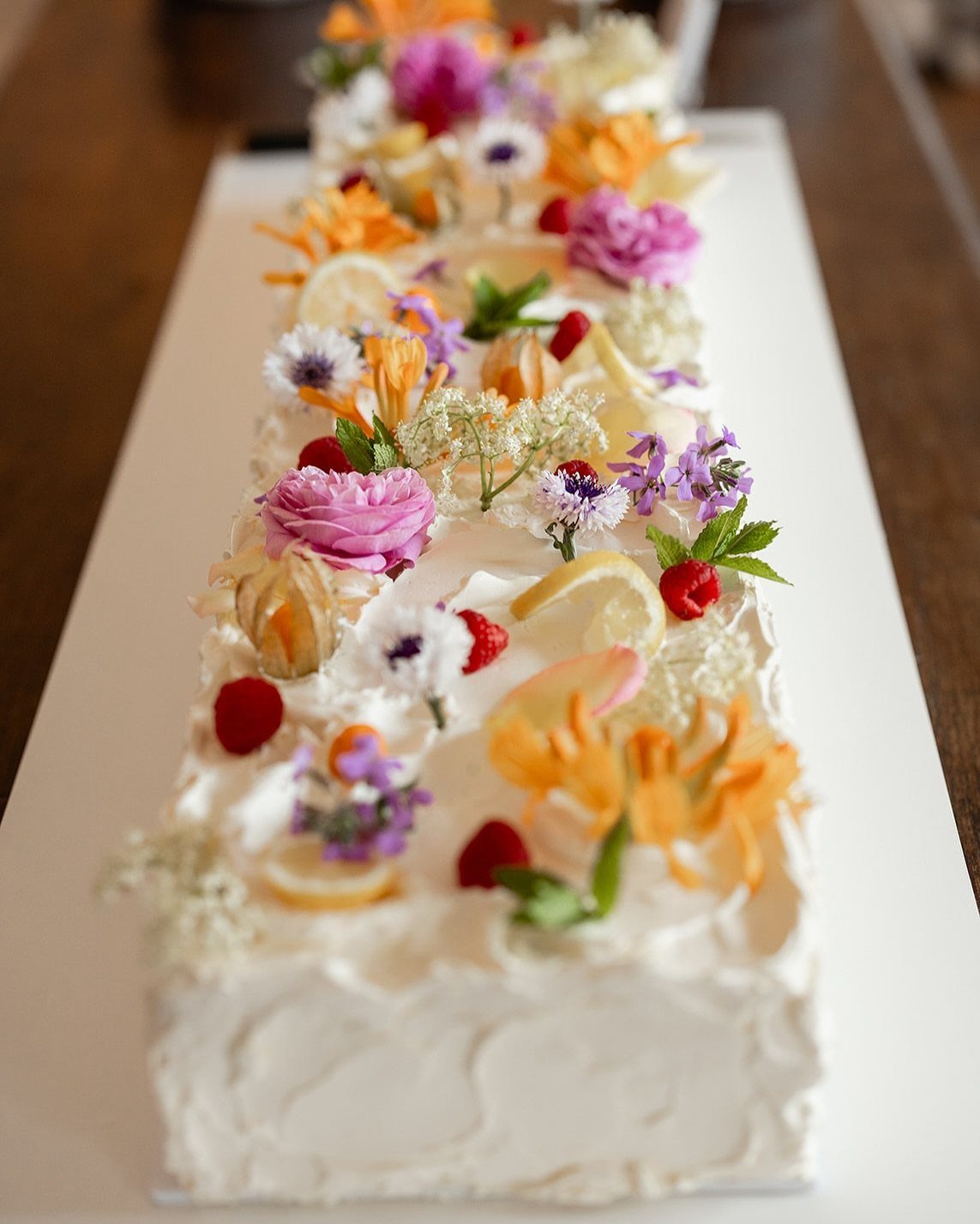
A long sheet cake set directly on the dessert table turns the whole surface into part of the display instead of isolating the cake on its own pedestal.
You get multiple flavors across the length without the cost of separate tiered cakes, and your catering team can slice from either end to keep lines moving.
Spring styling means piped florals, fresh berries, edible petals, or a monogram worked into one corner; the finish needs to look intentional from every angle since guests will approach from both sides.
This works best when the table itself is part of the design, not an afterthought wheeled out after dinner.

Essential Cake Decorating Tools: Getting ready to decorate but not sure what tools you need? RFAQK offers a complete set that includes everything you need to start decorating Cakes like a PRO! 48 Numbered Easy to Use icing tips, with E-Book in PDF, a booklet and a complete video course showing the outcome of each Icing Nozzle,2 icing couplers, 20 disposable icing bags (12-inch), 1 Reusable pastry bag (12-inch), Flower nail & lifter, Cleaning brush, Storage box that keeps everything organized

PACKAGE CONTENTS: You will receive 2 pieces pink cake arch guide tool, this cake ruffle markers for 6"-10" cakes.

Essential Cake Decorating Kit: 12 Russian and 2 standard numbered stainless steel piping tips, 1 reusable and 30 disposable pastry bags, 3 reusable converters. With these key decorating tools, you'll be able to make cake decorating a piece of cake.
10. Berry-Forward Options
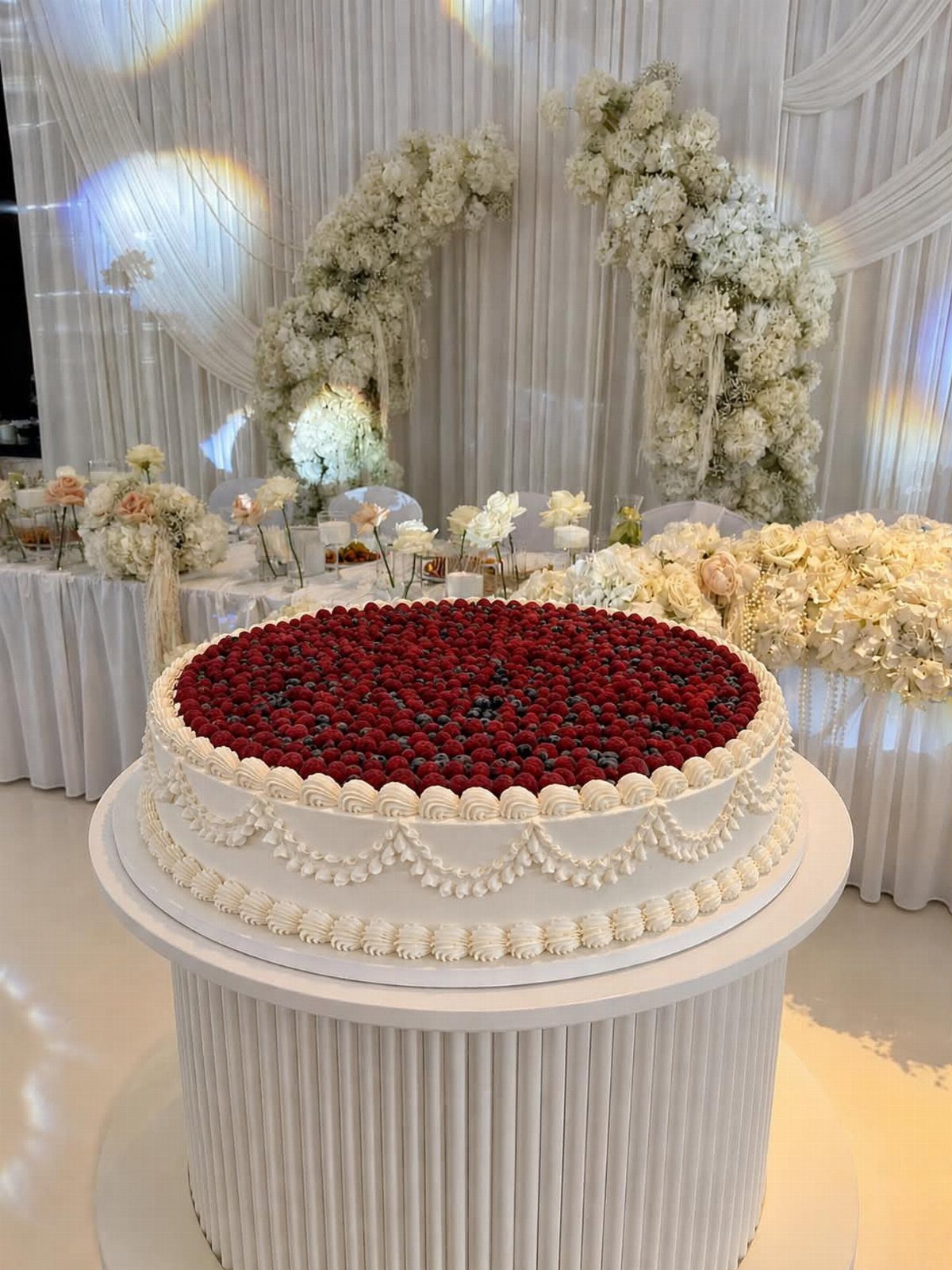
Strawberry, raspberry, and mixed berry layers give you color that comes from the ingredient itself rather than from dye or decoration.
The dome shape, pâtisserie-style, reveals stratified layers when sliced that a traditional tiered cake usually hides. Fresh berries on top need to be added as close to service as possible; they weep moisture into buttercream if left too long.
The sponge itself stays quiet, vanilla or almond, so the compote or mousse filling can taste like actual berries instead of just sweetness. This suits couples who want the flavor to be the design statement.

Rustic & Elegant Design – Handcrafted wooden wedding cake topper featuring a romantic Mr & Mrs silhouette under a floral arch. Perfect for rustic, country, boho, barn, or garden weddings.A beautiful piece of art that makes your cake stand out and becomes a cherished home display after the wedding.


Material of cake topper: wood
11. Butterflies and Ruffles Cake
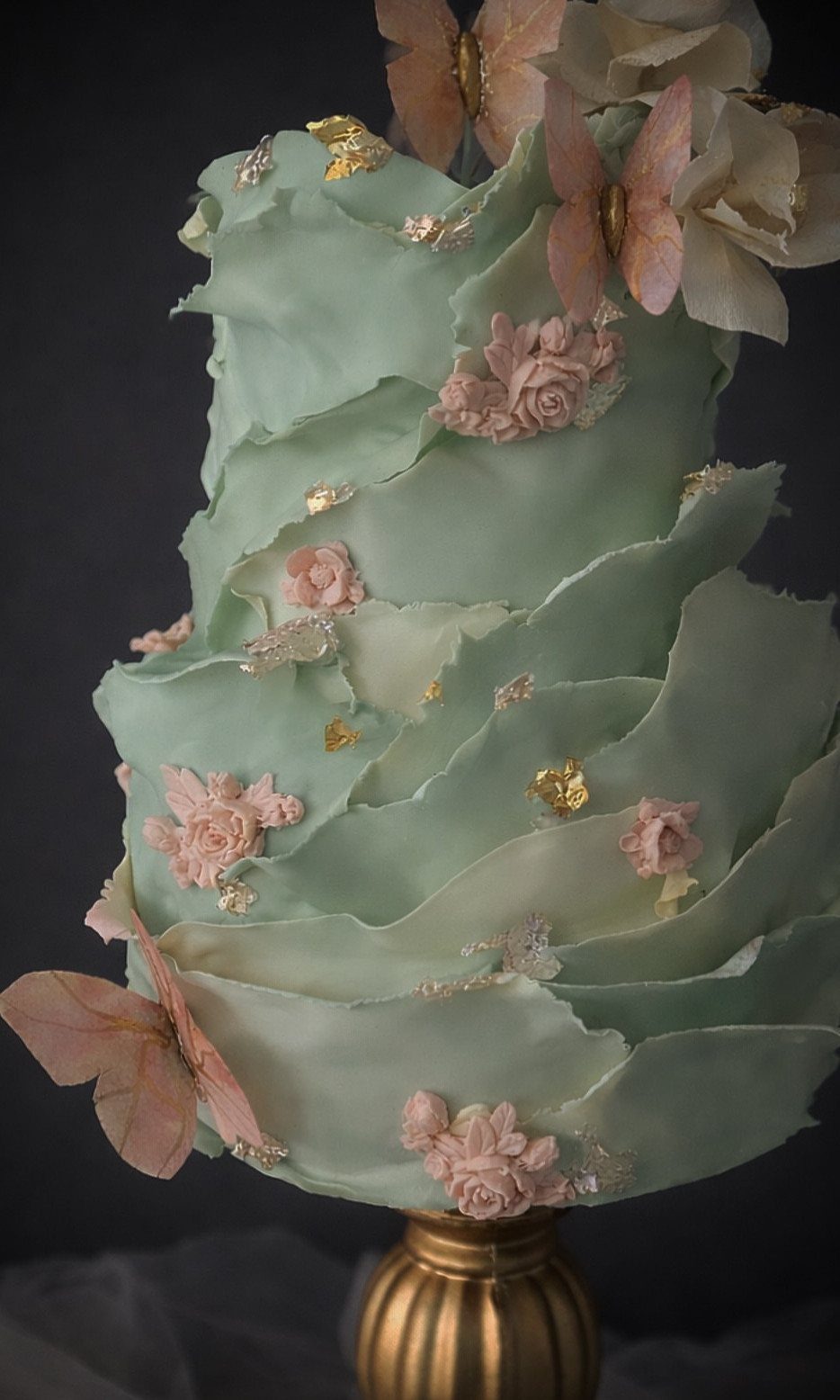
Pale green ruffled fondant, small pink sugar roses, and peach butterfly ornaments give you a cake that moves between garden and couture. The ruffles need to be planned tier by tier; uneven spacing turns from intentional texture to mistake fast.
Gold leaf catches light but flakes during transport, so the baker should apply it on-site if the venue allows. The butterflies, if sugar, add weight the structure must account for; if decorative, they need food-safe contact with the fondant.
This much ornament in one place means the rest of your reception design can stay simpler without the whole feeling flat.
12. Blue Watercolor Wedding Cake
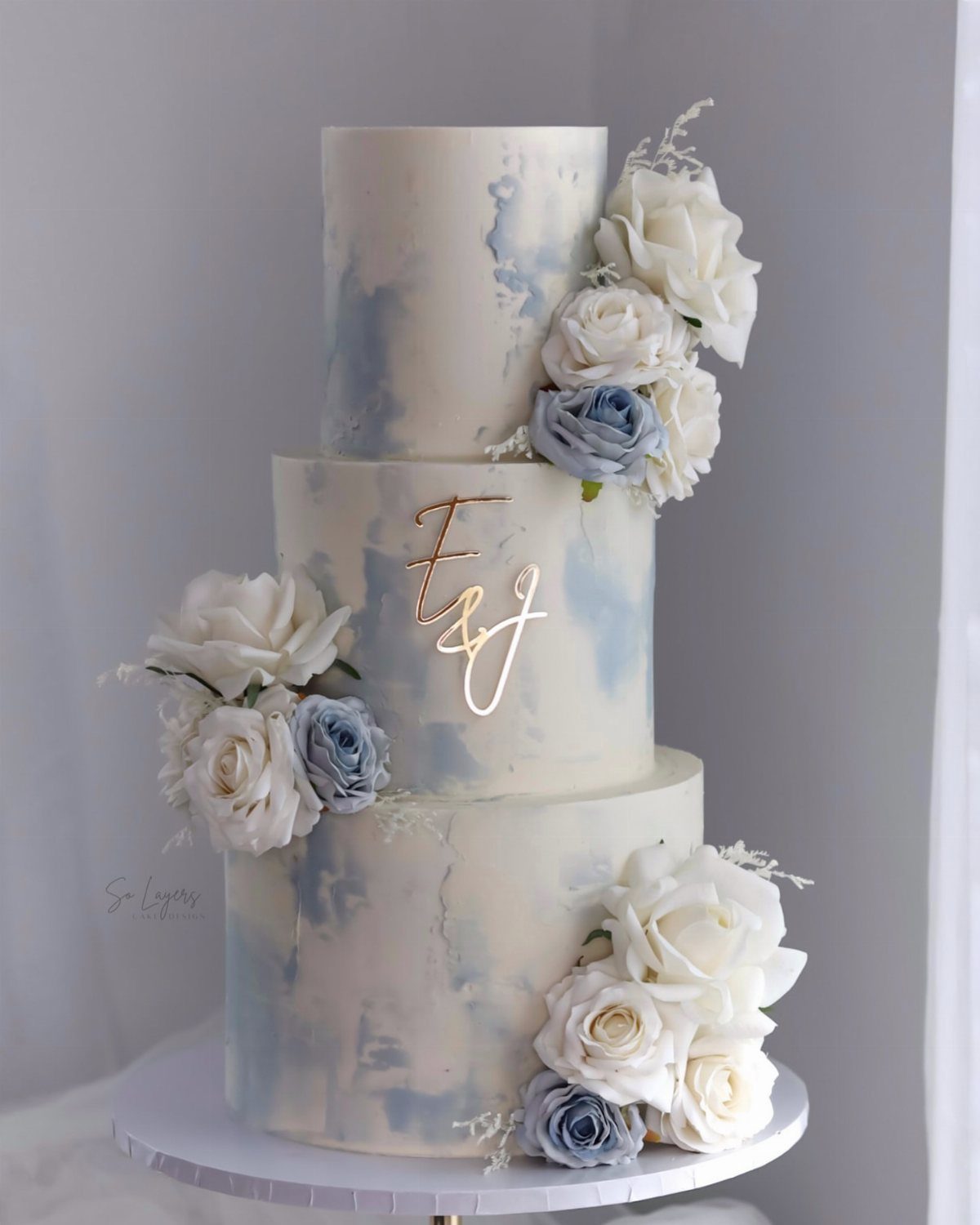
Soft blue watercolor patches against white buttercream carry the sky-and-cloud feeling of early spring without the formality of a pattern.
Dusty blue sugar roses match the watercolor tone rather than competing with it, and a monogram gives the center a resting point.
The watercolor technique needs a buttercream base soft enough to blend into but firm enough to hold the painted patches; ask your baker which day’s consistency they use for this finish.
Vanilla-raspberry or lemon-blueberry filling keeps the flavor as light as the visual. This style photographs best in natural light, so placement near windows or under tent openings matters.
13. Tulip Pattern Tiered Cake
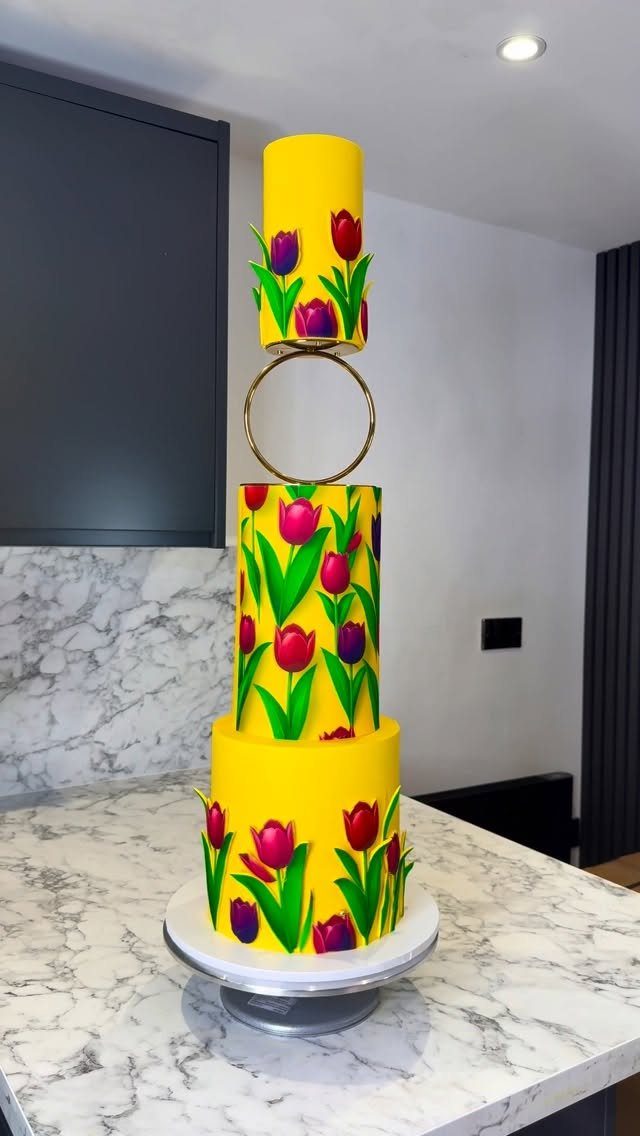
Painted tulips on yellow fondant give you a spring motif that reads as intentional art rather than seasonal default.
The gold ring separator between tiers adds height and air without extra cake; it also means your florist or baker needs to secure each tier independently so nothing shifts in transit.
This much color and pattern wants a simple reception table so the cake stays the visual anchor instead of competing with busy linens. Ask to see a sketch before the baker starts painting tulips freehand to confirm scale.
Two saturated colors of flower, red and purple here, keep the look cohesive against the yellow ground; I think three petal tones would have competed with each other.
14. Pastel Pink and Blue Cake
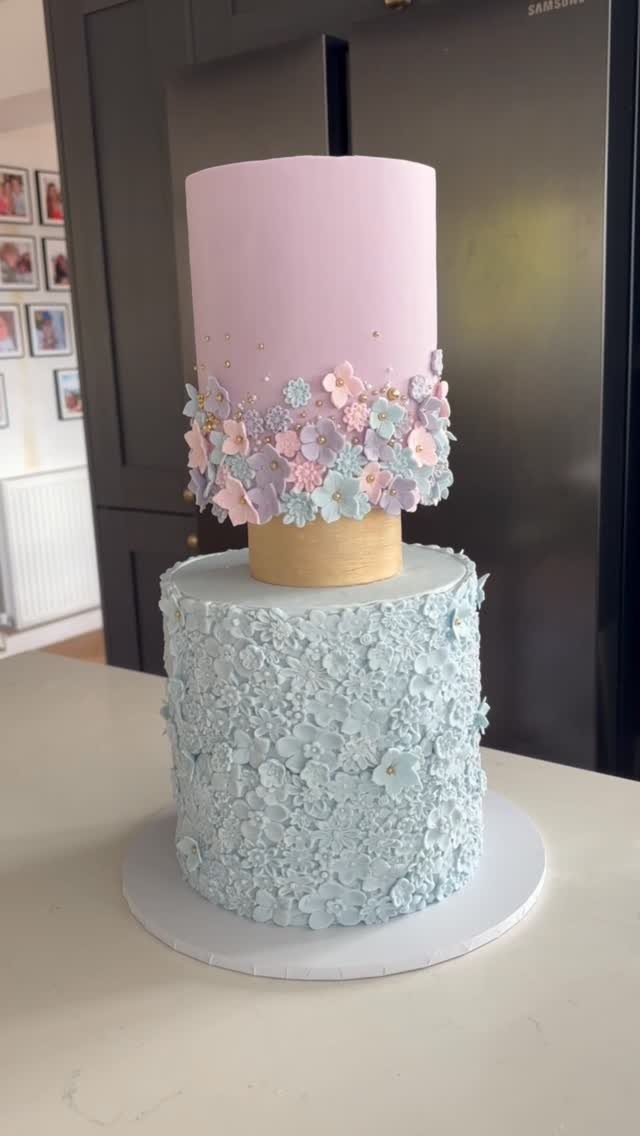
A smooth pink tier above and a textured blue tier below swap the usual matchy expectation for contrast without clash.
The gold cylinder spacer raises cost modestly, less than a full extra tier, but needs the baker to build internal dowel support through the center.
Frosting flowers on the lower tier catch light differently than smooth fondant; placed in clusters, they read as decoration, scattered they read as accident.
Spring peonies in brighter pink, fresh or sugar, bridge the 2 tiers and tie the cake to a seasonal bouquet. Vanilla-almond or strawberry and cream carries the pastel tone into flavor without adding color you did not plan.
15. Pistachio Rose Loaf Cake
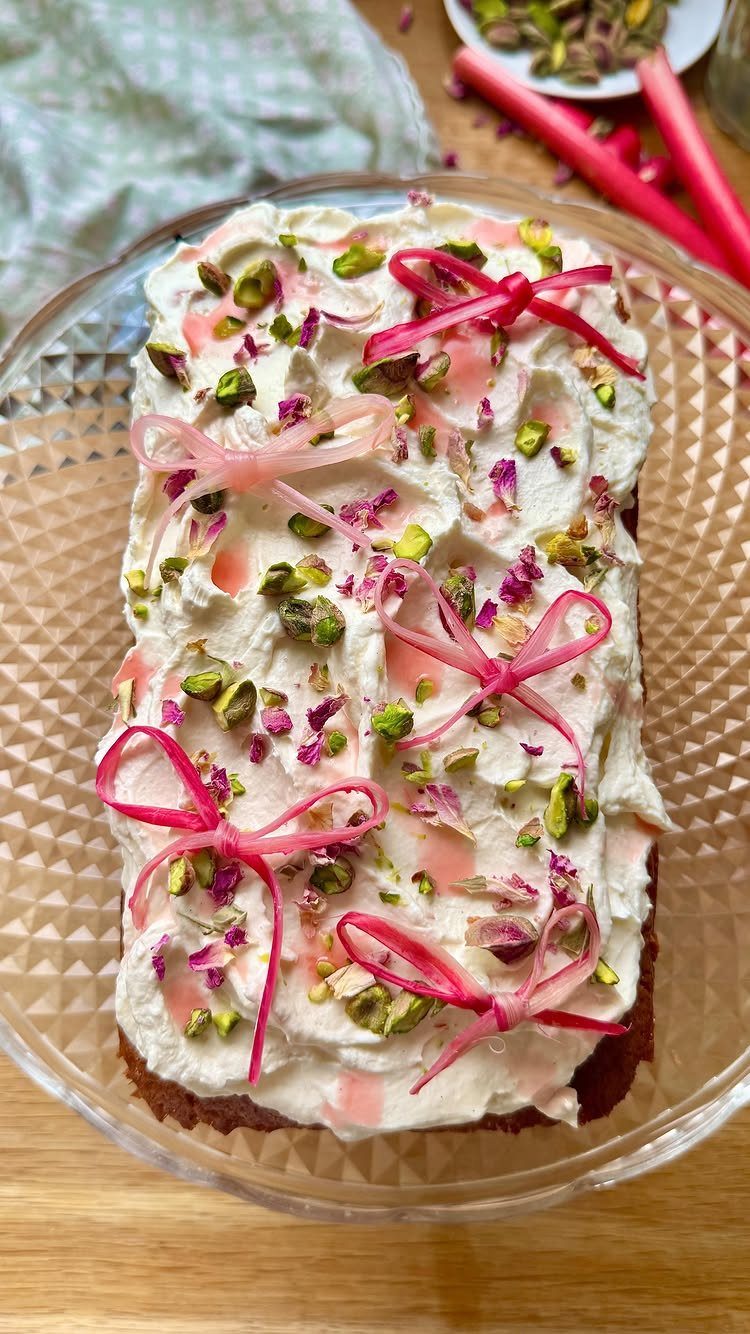
A loaf shape at a wedding breaks the tiered-cake expectation deliberately; this is dessert served as celebration rather than centerpiece.
Pistachio cake with rose frosting pairs a nutty crumb against floral sweetness, a flavor match that reads as considered rather than safe.
Crushed pistachios and fresh petals on top need to go on the day of, not the night before, or the nuts soften and the petals wilt.
Ribbon bows at each end, if you add them, should be removed before slicing; paper or fabric ribbon is not meant against buttercream.
This size feeds fewer guests than it looks, so order by count rather than by eye, and set it on a raised platter so it does not disappear on a crowded sweets table.
Choosing the Right Flavors
Lemon, blood orange, and grapefruit keep a buttercream cake bright without the weight of cinnamon or clove.
Berry compotes and raspberry mousse add color where the slice shows, not just on top. Lavender syrup, rose water, or elderflower cordial pair with vanilla or almond sponge, though floral concentrates go soapy fast if you pour too heavy.
Even chocolate fits if you pair it with cherry or seasonal fruit rather than dense ganache alone.
If you are tasting in late winter for a May wedding, ask your baker which spring berries will actually be available by your date.
Frozen compote tastes different, and "seasonal" on a menu in March does not guarantee the same fruit in June.
Coordinating with Wedding Style
The finish on your cake should match how formal your dress, venue, and invitations already read.
Textured buttercream reads dinner-party relaxed; smooth fondant carries the polish of a seated ballroom reception. That distinction matters more than color match, which most bakers handle without instruction.
Coordinate with your florist on fresh stems, not just hue: food-safe handling, stem placement, and who attaches what and when.
The same baker who can paint loose watercolor may not be the one who builds Lambeth swags; portfolio examples show you their proven range, not their aspirational one.
For guest count, decide early whether the display cake feeds everyone or whether sheet cakes supplement from the kitchen.
Tiers run more per slice than sheet or rectangle cakes, and the extra visual impact only pays off if guests watch you cut it.
Dietary Considerations
Tell your baker about any dietary restrictions by the three-month mark. Gluten-free sponge and plant-based buttercream have both improved to where guests often cannot tell the difference, but the recipes take testing your baker may not do on short notice.
Outdoor spring receptions carry a temperature risk the indoor March tasting will not show you.
Lighter frostings soften above 75 degrees Fahrenheit; your baker can substitute heat-stable options if you ask specifically, not as a default. That conversation belongs in the first meeting, not the week before, when change costs rush fees or becomes impossible.
Edible flowers and candied citrus peel do double duty as decoration and flavor, though I would check that your supplier sells food-grade products, not ornamental-only.
The decorative pansies sold for crafts and the ones grown for eating are not always the same plant, and pesticide residue does not rinse off a petal.
Visual Appeal
A cake that photographs well starts with placement.
Natural light flatters watercolor and soft blush; direct sun blows out pale tones and melts buttercream. If your venue has windows or tent openings, position the cake there for the portrait shots, then move it if heat demands.
Ruffles, pearls, and pressed flowers all catch light differently.
Pearls reflect in flat highlights; ruffles shadow themselves; pressed blooms read matte. Mix too many finishes and the camera flattens them into noise.
The monochrome cake, all white or ivory, relies on actual dimension to register in photos.
Without color variation, the depth must come from tier height, separator rings, or the angle of light. Ask your photographer about that during the walkthrough, not during the rushed reception hour.
Frequently Asked Questions
What are some popular flavors for spring wedding cakes?
Citrus buttercream works for spring because it cuts the sweetness without the weight of fall spices. A ring of berry compote or a layer of raspberry mousse turns the inside of the slice into something you see before you taste.
Chocolate can still read as spring if you trade the ganache for cherry or stone fruit that is actually in season.
What are the trends in wedding cakes for 2026?
Modern shapes like asymmetrical tiers and curved silhouettes read as gallery pieces before dessert. Vintage details return with softer execution, pastel Lambeth piping and pearl strands interpreted in lighter colors instead of heavy white.
The spring direction leans toward one strong statement, whether that is a bold shape, a single texture, or an unusual flavor pairing, rather than accumulation of ornament.
How much should a wedding cake for 100 guests cost?
A cake for 100 guests typically runs $300–$700 at a grocery bakery and $500–$1,500+ from a standalone cake shop, before delivery and setup.
Display tiers cost more per slice than kitchen sheet cakes, so the final number depends on whether you serve from the decorated centerpiece or supplement with simpler cakes sliced in the kitchen.
Your baker’s portfolio, the complexity of finish, and delivery distance all move the price independently of head count. Ask for both options when you book, not when you are too close to the date to adjust.