A dance floor wedding rental is a temporary surface laid over whatever your venue already has, from hotel carpet to concrete patio, that becomes the physical center of the reception.
The right choice depends on whether you need to protect a historic floor from damage deposits or want LED tiles that turn the surface itself into a light show, and costs swing from roughly $600 for basic vinyl up to four-figure rentals for programmable panels that need dedicated power runs and color-corrected photography.
Vinyl Wrapped Dance Floors
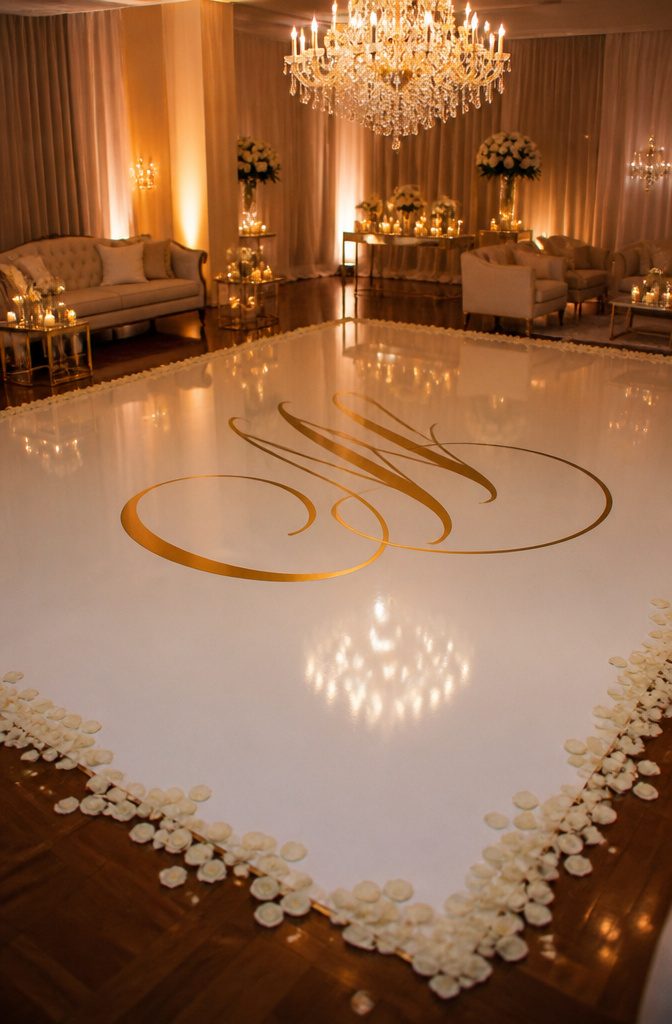
A vinyl wrapped dance floor arrives as a sheet or tile system laid directly over whatever surface the venue already has, which means concrete, worn parquet, or even carpet in a hotel ballroom disappears under a smooth, finished plane without a single nail or adhesive bond to the building.
The wrap itself carries every visual effect a couple might want: high-gloss finishes bounce light from chandeliers or string arrangements, matte reads softer under photography flash, and metallic or glittered surfaces turn the floor itself into a reflector that multiplies candlelight across a room.
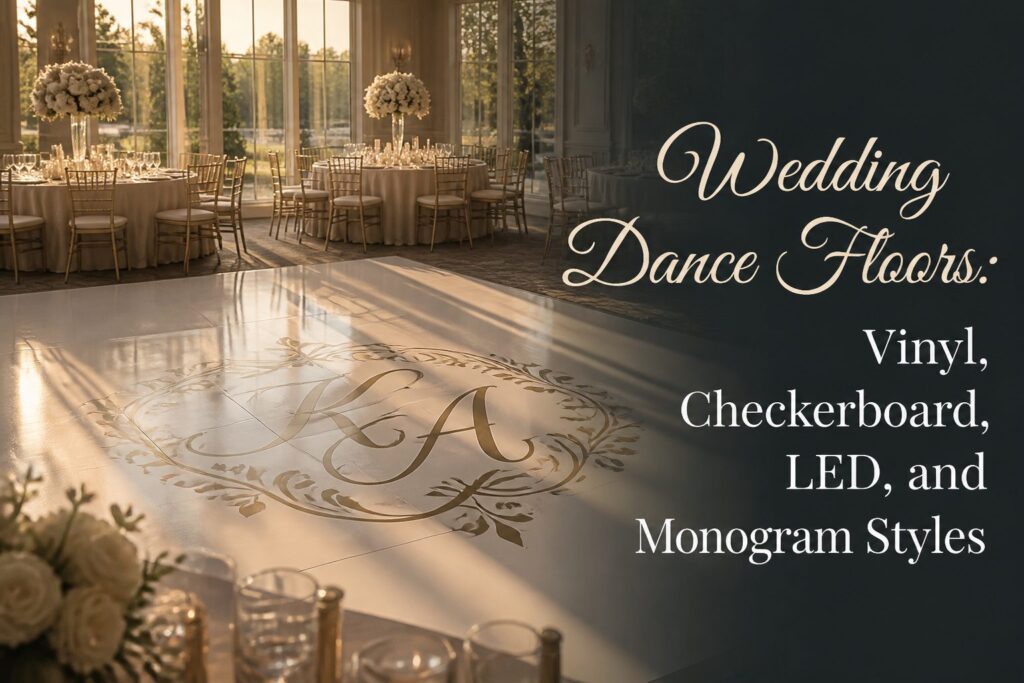
Custom monograms press into the material at the center or edge, printed crisp enough that first-dance photographs catch the initials without blur.
The real advantage sits in the reversal.
After the last song, the crew peels the vinyl up and the original floor returns untouched, which matters enormously for historic venues, museum spaces, or any reception hall with a damage deposit measured in four figures.
For budgets running under $10,000, this is often the only way to get a custom dance floor wedding look without dedicating a tenth of the total to floor replacement fees.
Vinyl wrapped dance floors give up some durability: a vinyl surface scuffs under stiletto heels dragged through gravel from the garden entrance, and outdoor humidity can bubble edges if the subfloor was not fully sealed first.
Glossy finishes show every footprint by 9 p.m.; matte hides them better but photographs flatter. Choose based on which memory you are buying: the night itself, or the album after.

CREATE A LASTING MEMORY: Surprise your guests with a romantic personalized dance floor decal made just for the bride and groom's big day.

Impact-Resistant Material: Our gym flooring set is made from high-quality, impact-resistant PP + PVC, ensuring durability and preventing edges from curling or surface peeling. Featuring a wood-grain design with just the right level of firmness, these interlocking tiles provide a reliable surface for ballet or tap dance training. You can practice confidently without worrying about scratching or damaging the floor.
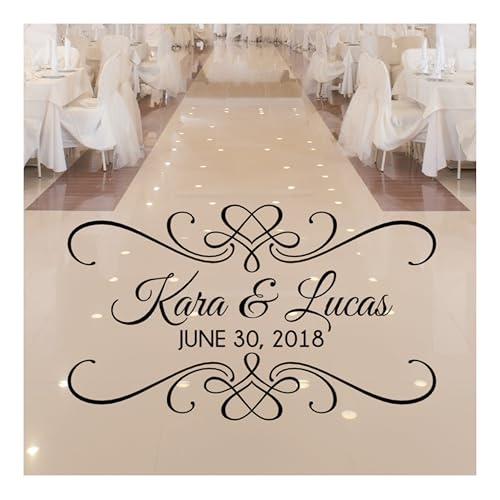
PERSONALIZED FOR YOUR CELEBRATION – Customize your dance floor decal with your names, wedding date, initials, or custom wording to create a beautiful focal point for your reception.
Checkerboard Floors
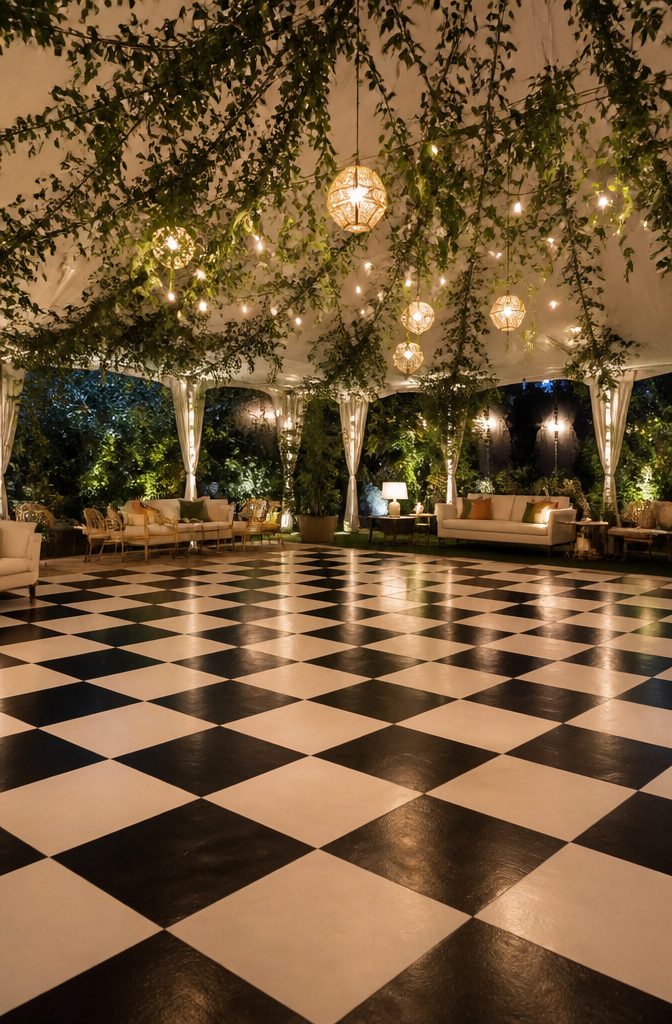
A black-and-white checkerboard floor does something almost no other pattern manages: it photographs like a built-in stage.
The alternating squares create depth that flat color cannot, and when guests step onto that grid, their movement reads as deliberate even when it is not.
Photographers have long understood this; the lines give the eye a place to travel, and every candid shot gains a geometry that reads as intentional design.
The grid itself becomes an invitation. Guests who might hesitate at the edge of a solid floor find the squares leading them forward, one step at a time, as if the pattern itself expects them to join.
This is the floor that solves the empty-dance-floor problem before the DJ even starts.
The style has loosened up from its ballroom origins.
Paired with wicker textures, grasses, and soft drapery, it carries a modern Regency-meets-boho mood that works in tents, lofts, and gardens alike. It is less about formality now than about contrast: the hard graphic against soft surroundings.
Make the dance floor one of your first design conversations. It can inspire everything from your lighting design to your furniture layout.
For couples working through layout decisions, that timing matters. The checkerboard sets visual anchors early, which makes every later choice, from table placement to where the band sets up, easier to place with confidence.
🏠Details: 15.8x78.8 Inch,3.8x3.8 inch per checkered, total 8.65 sq.ft (40cmX2m). Self adhesive. Made of durable vinyl. Checkered black and white contact paper peel and stick waterproof. Oil proof. Fully removable.

✔【Plaid Bootcut Jeans Fabric Features】𝐖𝐨𝐦𝐞𝐧'𝐬 𝐣𝐞𝐚𝐧𝐬 𝐫𝐮𝐧 𝐬𝐦𝐚𝐥𝐥 𝐚𝐧𝐝 𝐚𝐫𝐞 𝐚 𝐥𝐨𝐰 𝐬𝐭𝐫𝐞𝐭𝐜𝐡 𝐟𝐚𝐛𝐫𝐢𝐜, 𝐬𝐨 𝐰𝐞 𝐫𝐞𝐜𝐨𝐦𝐦𝐞𝐧𝐝 𝐨𝐫𝐝𝐞𝐫𝐢𝐧𝐠 𝐚𝐭 𝐥𝐞𝐚𝐬𝐭 𝐨𝐧𝐞 𝐬𝐢𝐳𝐞 𝐥𝐚𝐫𝐠𝐞𝐫.Pantalones acampanados para mujer made of medium thickness high-quality fabric for skin friendly, comfortable and breathable. The fabric is stretchable and resilient.

FLAT-WOVEN RUG. This checkered rug is crafted from a cotton and polyester blend, offering softness, coziness, and low maintenance. The thin weave fits under most doors, making it versatile for any space, while the soft cotton blend adds comfort underfoot
Colourful Patterns
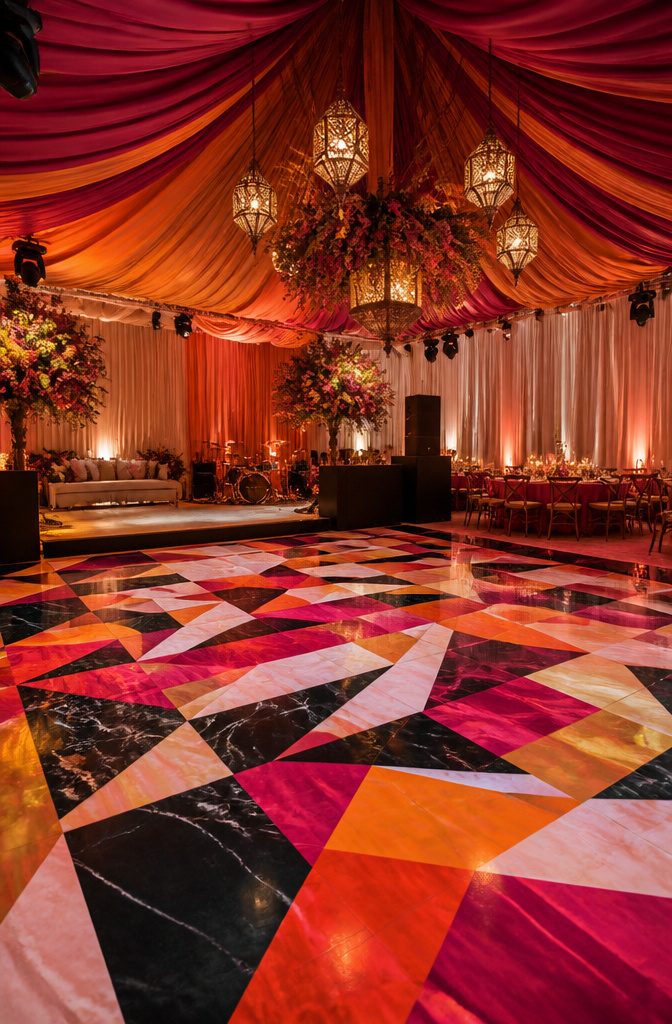
A bold geometric pattern on the dance floor sets the energy before the band even warms up.
I have seen guests walk into a reception, spot a checkerboard or oversized floral vinyl wrap, and immediately loosen their posture. The visual cue tells them this room is for moving, not for sitting through speeches.
Color works the same way. Saturated palettes, especially ones that echo the wedding flowers or linens, read as intentional rather than scattered.
The Jamaica Observer notes that tropical, bohemian, and summer weddings carry these especially well, which makes sense: those settings already invite informality, and a patterned floor extends the permission to the whole room.
Photography is where the risk sits. High-contrast checkerboard floors have stayed timeless because the black and white simplifies to clean lines in every lighting condition.
Multicolored geometrics or dense floral prints can date an album fast; a palette that felt punchy in 2019 sometimes reads as busy and specific when the couple flips back through five years later.
My own leaning is toward one or two saturated colors repeated in a simple repeat, something that photographs as texture rather than as statement.
The guests feel the energy. The camera catches the mood without pinning it to a single trendy year.

➤【Stunning 3D Visual Effects】Combining high-quality tempered glass with infinity mirror panels and LED lighting, this dance floor creates mesmerizing 3D effects that instantly captivate attention. Perfect for weddings, parties, and events, it elevates the visual impact and leaves a lasting impression.

➤【Mesmerizing 3D Infinity Effect】: Transform any space with our 3D LED floor tiles, featuring a captivating infinity effect that creates a futuristic and immersive atmosphere, perfect for events, performances, and decorative lighting.

Light up Moment of Wedding Ambience Maker: these LED light up glow sticks feature the romantic "LET LOVE GLOW" printed on the surface, which ideally fits the wedding scenarios theme, and instantly light up the wedding reception dance floor, creating an dreamy wedding atmosphere; The colorful glowing sticks adds sparkling touch to wedding photos and videos, making your day more memorable for both the newlyweds and guests, and helping you create an unforgettable moment
Dark Wooden Floors
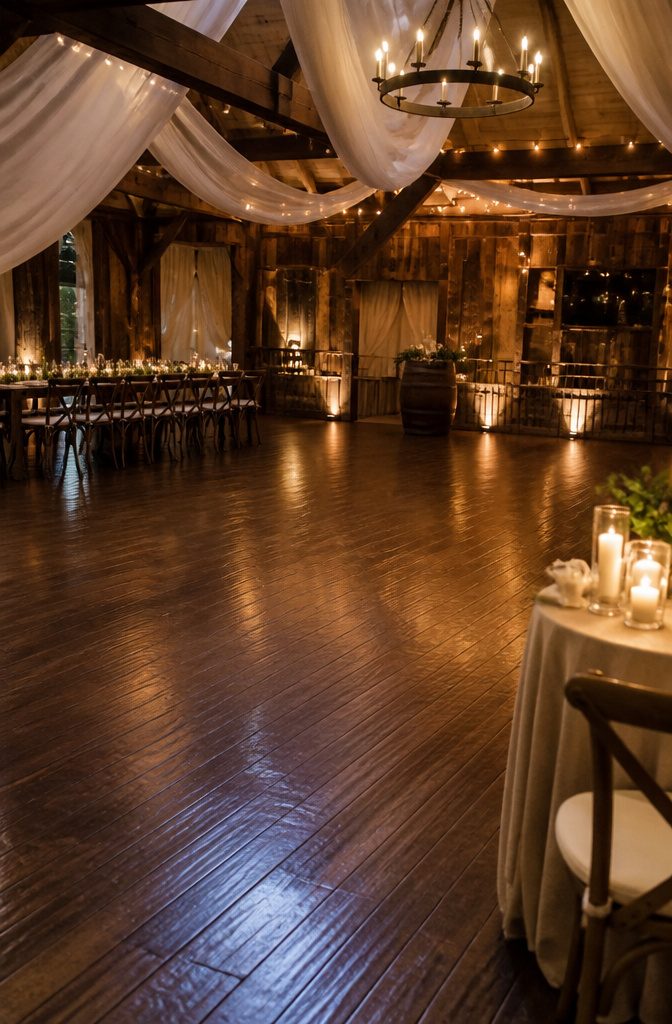
Stained wood absorbs light instead of throwing it back at your guests, which softens the whole room and makes candlelight actually look like candlelight.
That warmth is what makes a dark wooden floor the anchor for barn weddings, lodge receptions, and the more formal classic ballroom setups where you want the space to feel grounded rather than flashy.
The finish matters more than the species. A deep walnut or espresso stain reads evening and celebration; anything lighter drifts toward casual and can look like a stage floor under reception lighting.
If your venue already has one built in, usually in a historic ballroom or a converted barn, ask whether you can use it for dancing or whether they require a protective overlay that will change the color and the feel.
Renting a dark wood floor is straightforward enough, though it costs more than vinyl because the panels are heavier and the install takes longer.
Most rental companies will match the stain to your palette if you request it a few weeks out.
The real limit is outdoor use; even sealed wood swells and cups on grass or uneven ground, so this is an indoor or hard-surface call.

Premium Material Construction: Made of High-Quality Self Adhesive Vinyl material that ensures durability and professional appearance

PREMIUM QUALITY: Buy our wall decals from a national vendor with confidence

CUSTOM DESIGN: Add names, initials, or a monogram to personalize your wedding dance floor or outdoor party space with unique vinyl decals.
Monogrammed Dance Floors
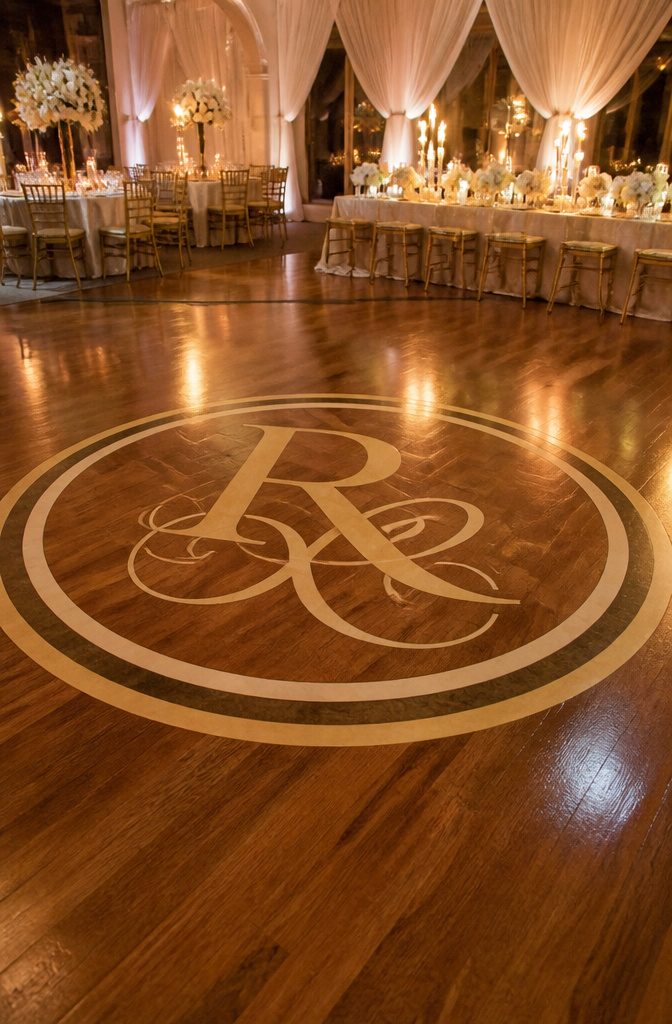
A monogrammed dance floor puts your initials or wedding date underfoot in one of three ways.
Vinyl decals stick directly to the surface and peel off afterward, which makes them the practical choice for rented floors where you cannot alter the material.
Gobo projection throws light from above, so the image moves with the crowd and never risks scuffing off; the trade-off is that it washes out under bright ambient light and needs a rigging point your venue may not have.
True inlay, where your letters are cut from a contrasting material and set flush into the floor itself, looks permanent and photographs like a hotel ballroom, but it requires buying or building the floor rather than hiring one.
The personalization is fixed for the entire night, which matters more than couples first think.
Your monogram will show up in every photo taken on the floor, including the ones where your uncle’s dance moves steal the frame, and it cannot be swapped out if you change your mind during the reception.
Design proofing adds lead time that a plain floor does not need: you will review a mock-up, request tweaks, and wait for production before the thing even ships.
Rush that stage and you risk a crooked initial or a date that reads wrong in your photographer’s wide shots.

【SECURE & COMFORTABLE】- Color: Grey/Black; Thickness: 0.06"/1.5 mm; Product Weight: 31.8 lbs/14.4 kg; With the perfect balance of comfort and stability, this dance floor mat features a matte surface to keep the floor from sliding around and your feet from hurt.

PVC Comfortable Material: Color: Grey/Black; Product Weight: 31.1 lbs (14.1 kg). The high-quality dance floor is manufactured from scratch-proof, water-proof, and lightweight PVC material. Our product features a matte surface with the perfect balance of comfort and stability to keep the floor from sliding around and your feet from hurt.

【Professional-Grade Marley Dance Mat】Designed for ballet,Jazz , Pop and other Dance Forms and fitness, this 6 x4Ft (5mm thick) dance floor mat features a smooth yet grippy surface that provides comfort for barefoot workouts while maintaining perfect traction. The 2026 upgraded premium PVC offers just-right flexibility for turns and jumps
LED Dance Floor Tiles
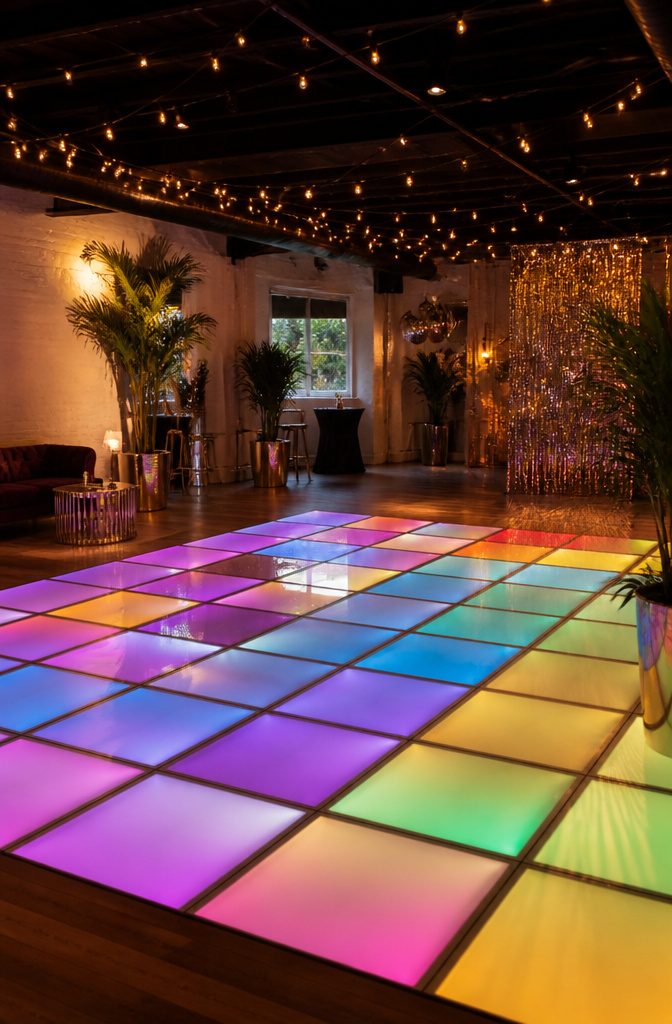
LED dance floor tiles turn the whole floor into a light panel that guests walk and dance on.
Each tile is a programmable panel that shifts color in sequence or on beat, so the surface itself becomes part of the show.
The retro-meets-modern look works for glam weddings and couples who love a throwback to the ’70s and ’80s.
The weight and power requirements are not light.
These panels need dedicated power runs, and the full assembly is far heavier than a standard vinyl or wooden rental. Setup crews handle the load, but your venue needs the electrical capacity and the floor underneath that can take it.
Rental cost sits well above the basic tiers.
One Reddit user quoted $600 for a simple 8’x10′ standard floor and found it already pushed their modest budget; LED tiles run higher still. For couples working under $10K, this is usually the first upgrade to cut.
The photography problem is real and specific. Tiles throw saturated color up onto skin and clothing, and that color-cast is hard to correct in post.
Photographers compensate by timing formals off the active floor, shooting from angles that minimize the bounce, or keeping a neutral light source close to the subject.
If the dance floor is your whole reception design, plan the photo schedule around its limits, or budget extra editing time for color correction.

Durable - Our high-quality vinyl will last 5-7 years, even in harsh weather conditions.

Customized Wedding Decoration: The material is safe and reliable, made from vinyl that is waterproof and durable, safe to use and not easy to fade

CUSTOM FLOOR DECALS: This product is a personalized wedding decal designed specifically for wedding dance floors, allowing names and dates to be displayed as a clear visual centerpiece during the reception.
Dance Floor Props
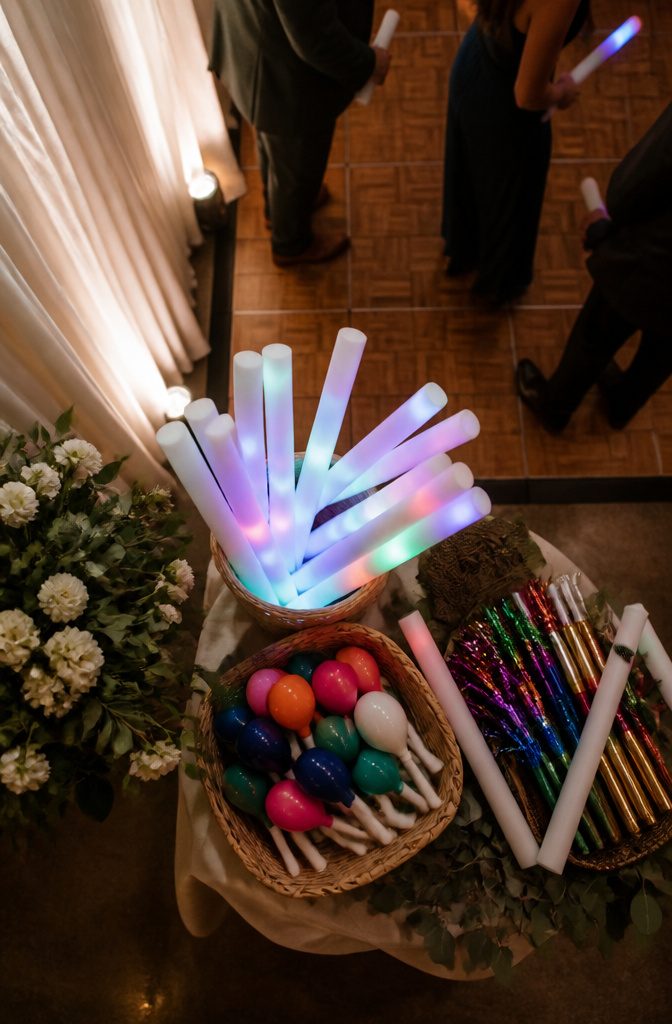
Props give hesitant guests something to do with their hands, which matters more than it sounds.
Light-up foam sticks, disco balls, confetti cannons, and handheld noisemakers all work the same way: they turn standing at the edge of the floor into participating without requiring anyone to dance alone.
I have watched a room full of people who would never start the first song grab a glowing stick and suddenly move with the group.
The foam sticks travel well and store flat, which makes them practical for a venue you are renting for one night.
A confetti cannon costs more per use but creates a single moment everyone shares, and that shared moment is what pulls the cautious onto the floor.
Handheld items work best when they are already in guests’ hands before the music starts, not passed out after the floor is empty.
The timing matters. A guest holding something when the beat drops is a guest who stays; a guest asked to cross the room to collect a prop is a guest who stays seated.

WIDE ROLL COVERAGE: Peel-and-stick vinyl lays one smooth, continuous surface in fewer pieces. Pick the 16 Sq.Ft (197") roll for a bathroom or the 52 Sq.Ft (630") roll for bigger rooms. Trim with scissors - no glue, no grout, no mess.
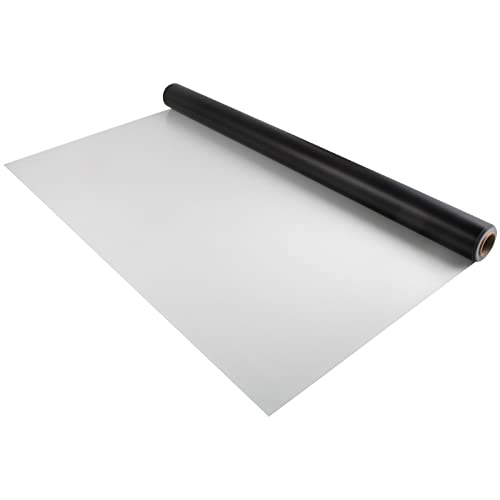
PVC Comfortable Material: Color: White/Black; Product Weight: 64.3 lbs (29.2 kg). The high-quality dance floor is manufactured from scratch-proof, water-proof, and lightweight PVC material. Our product features a matte surface with the perfect balance of comfort and stability to keep the floor from sliding around and your feet from hurt.
🏠Details: 15.8x197 Inch,3.8x3.8 inch per checkered, total 21.65 sq.ft (40cmX5m). Self adhesive. Made of durable vinyl. Black and white checkered contact paper. Oil proof. Waterproof. Fully removable.
Lighting Enhancements
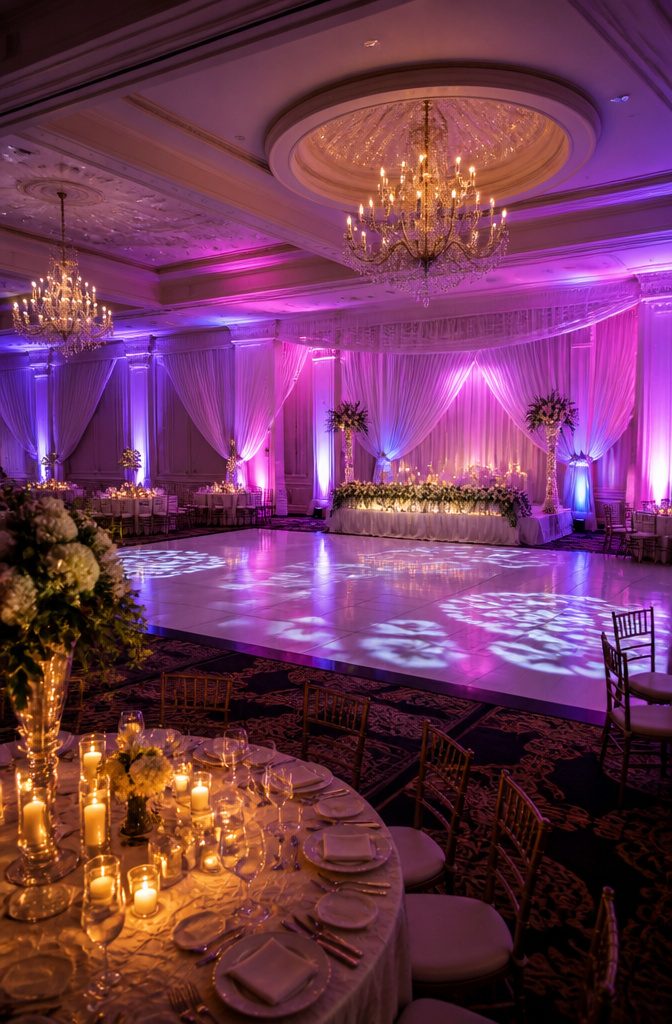
The right lighting doesn’t just decorate the space; it draws the line between dinner and dancing when the venue itself offers none.
I’ve watched a single uplight against a draped wall turn a corner of a ballroom into what felt like a separate room, containing the energy so it doesn’t bleed across the whole hall.
Without that containment, guests linger at their tables and the floor stays empty.
Chandeliers overhead give a floor gravity, but they work best when dimmed after the first dance so the focus drops to the people below.
String lights strung in canopies overhead do the opposite, softening boundaries rather than defining them, which suits an open layout where you want the whole room to feel continuous.
Pin spots are the precision tool: one tight beam on the cake table, another on the couple’s entrance path, and the eye travels where you send it.
Skip the pin spots if your venue already has recessed ceiling lights; you’ll pay to duplicate what exists.
Uplighting around the floor’s perimeter is the most reliable boundary-setter, especially in tent weddings or raw industrial spaces where walls don’t guide movement. The wash of color against floor or draping creates a threshold guests cross without thinking.
Cool white reads as modern; amber reads as warm; colored uplighting tends to photograph dated within a few years, so budget that choice knowing you may wish you’d stayed neutral.

Complete Dance Floor Kit: Create a portable dance floor kit with 9 interlocking dance tiles and 12 edge pieces forming a 3’ x 3’ (9 sq ft) dance floor panel, with the ability to expand into any size modular dance floor

Magnetic floor tile lamp: It adopts a magnetic design, which is simple and convenient to install. It can be installed on the wall and the ground. It is also rechargeable and does not require complicated wire connections. Charging for 3 hours, it can be used for up to 8-10 hours (10 units are equipped with a charging flight case)

Portable Dance Floor for Home Practice | Create a dedicated dance practice floor at home for tap, ballet, ballroom and more. Train with confidence on a surface built for both hard and soft dance shoes.
Central Dance Floor Placement
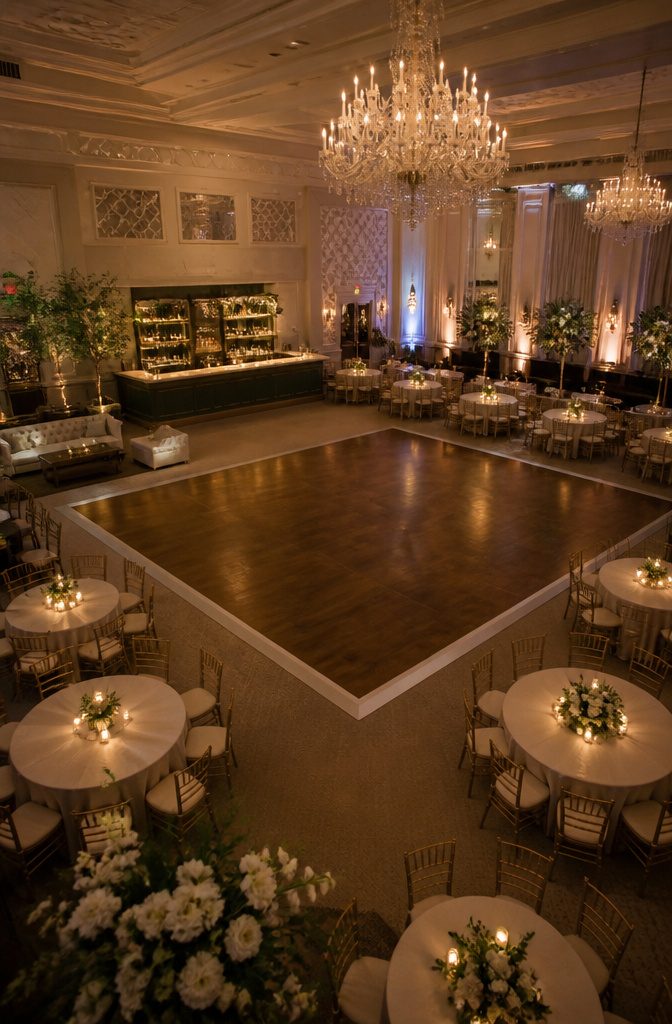
A 16 ft x 16 ft dance floor sits right at the center of most 120-guest weddings for a reason.
That size hits what planners call a "boutique footprint" — enough room to move, tight enough that the crowd packs in and the energy stays high.
An oversized floor backfires fast. Guests drift onto empty vinyl, feel exposed, and drift back to their tables just as fast.
Placement between the bar and seating seals the deal.
Anyone heading for a refill walks straight through the music and the motion. The couple, meanwhile, sets the tone from that middle space.
Every toast, every spin during the first dance, plays to the whole room. No one sits so far back they feel cut out.
The floor becomes the heartbeat of the night almost by accident. Visibility does the work.
Guests see the movement from their chairs, feel the pull, and join without being asked. An open layout helps, but the real engine is that central spot where nobody can miss what is happening.

1. Custom Wedding Dance Floor Decal: This beautiful monogram dance floor decal can be used as Wedding / birthday dance floor decal and a welcome sign. We have a selection of sizes to suit both signs and dance floors. Size Small-Large suit signs and Large-XXLarge for dance floors. Amazing feature to add to sparkle dance floor!

SO EASY TO APPLY! Detailed step by step instructions and a practice decal are included.

ADD A PERSONAL TOUCH: Customize your wedding dance floor decal with names or initials to create a unique and unforgettable centerpiece for your big day.
Venue Layout
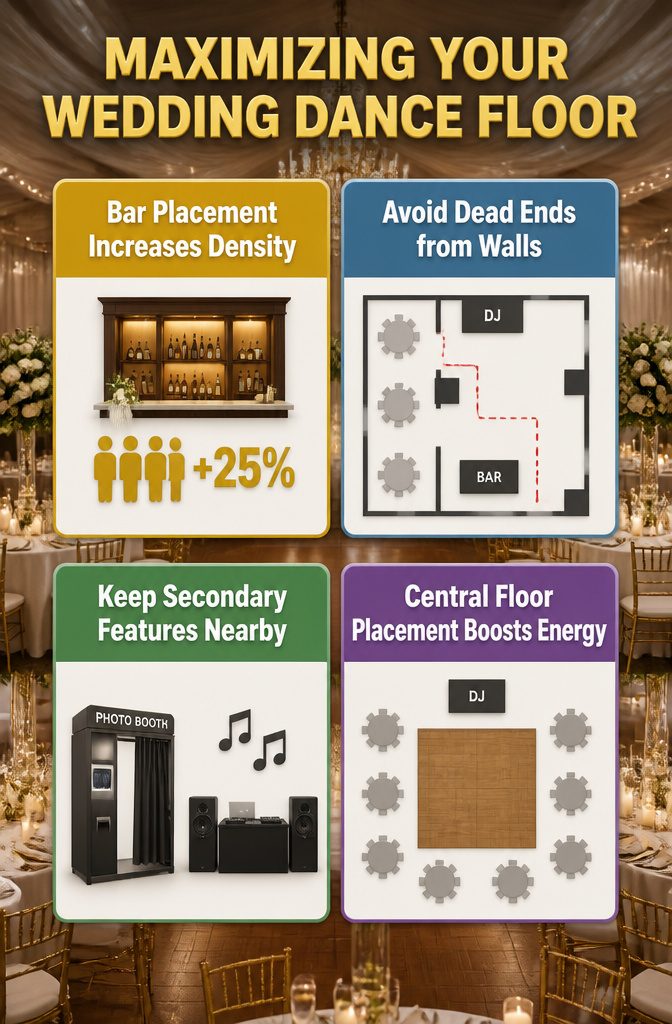
The bar placement in your reception room matters more than most couples realize.
Keeping the bar in the same room as the dance floor increases floor density by up to 25%; guests who leave for a drink in another space rarely return for the next three songs.
Walls and columns deserve a hard look before you sign anything. A floor plan that looks spacious on paper can turn into a maze of dead ends once tables, a DJ booth, and that bar go in.
I always tell couples to trace the path a guest takes from their seat to the bar and back; if they must squeeze past a service station or circle a structural column, you’ve built a bottleneck that drains energy from the floor.
Secondary attractions need the same scrutiny.
A photo booth tucked in a hallway becomes a rival venue; guests disappear and stay gone. Better to keep those extras within sight and sound of the music, where the pull of the crowd still reaches them.
A central dance floor placement has become popular for good reason.
Everyone faces inward, nobody feels exiled to the edges, and the energy stays concentrated rather than diffused across a long rectangle. The layout either works with that energy or works against it.

【DESIGNED FOR DANCING】 Designed for ballet, tap, and Irish dance, this marley dance floor mat provides a smooth, non-slip surface for at-home or studio practice. The Dance floor mat can be rolled up and taken anywhere you like.

Genuine solid Teak wood (Tectona Grandis) in oil finish
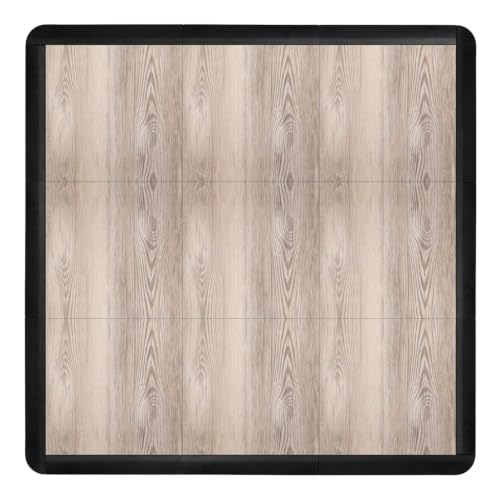
Unleash Your Potential Everywhere: Elevate every space into a vibrant stage with our portable dance floor, designed for superior performance. Experience easy installation and a smooth glide, making it the ideal choice for all dance styles, both indoors and outdoors.
Music That Bridges Generations
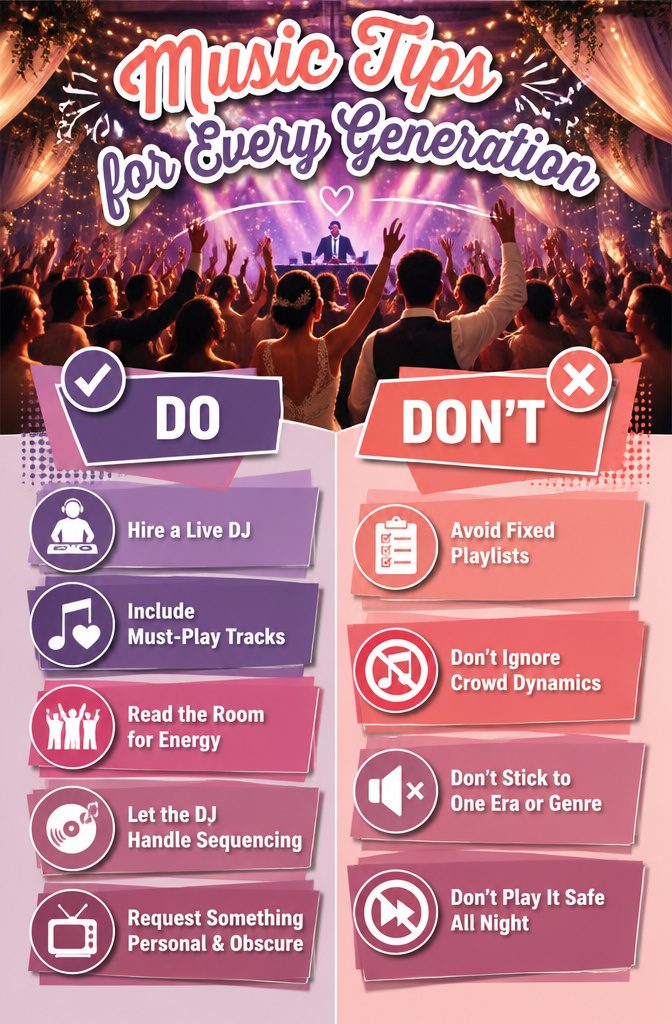
A DJ who reads the room in real time will keep more guests dancing than any playlist you spent three weekends perfecting.
The difference shows up the moment the energy dips: a live DJ notices the floor thinning and pivots, while your fixed list marches straight into the song that clears the room.
The tracks that bridge generations carry the same DNA.
Stevie Wonder and Fleetwood Mac hits from the 60s and 70s work because they already proved they move crowds across decades, and a fresh, amplified acoustic arrangement keeps them from sounding like wedding clichés.
The older guests hear the melody they recognize; younger ones hear a stadium anthem they did not know they needed.
Your input still matters.
Hand over five to ten must-play tracks that belong specifically to your friend group, then let the DJ handle the sequencing. That mix of personal history and professional intuition is what keeps a dance floor wedding from feeling generic.
The DJ might even learn something obscure for you, a 90s TV theme or a bar-band cover you heard on your first date, dropped at the exact moment the room is ready for it.
What Kills the Floor
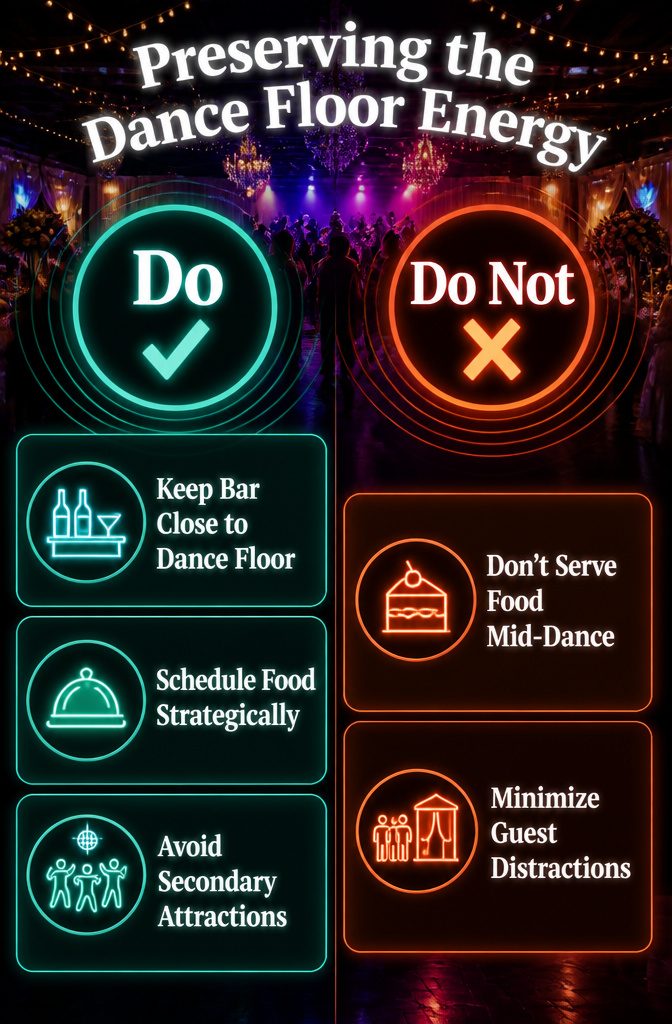
The bar location is the single biggest reason guests abandon a dance floor wedding. When the bar sits in a separate room or even 20 metres away, people leave for a drink and skip the next three songs.
Keeping the bar inside the same room as the band increases floor density by up to 25 percent, based on 2024 event data, and that density is what keeps the energy self-feeding.
Secondary attractions work the same way.
A photo booth or sweet cart parked in a hallway becomes a rival event. Guests wander off, get absorbed, and the floor thins out in waves.
The move is to tuck these extras inside the same visual space as the music, close enough that guests feel the pull of the crowd while they wait for their print or their candy.
Food breaks need the same scheduling discipline. A late-night buffet or slice of cake that interrupts the set list right when the floor finally fills will empty it faster than a slow song.
Talk to your caterer about serving during natural lulls, or stagger stations so people graze without leaving the room. The negotiation with your venue is simple: nothing that feeds guests should compete with what keeps them dancing.
Size for Your Guest Count
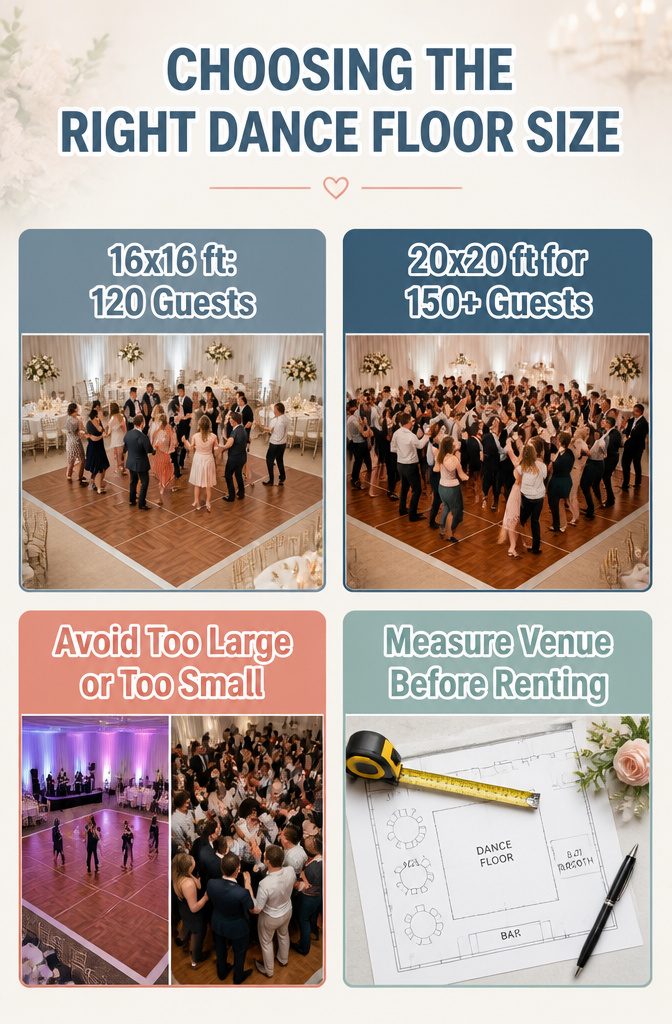
A 16 ft x 16 ft floor handles about 120 guests comfortably, and the ratio scales roughly from there.
Half the crowd means you can drop toward 12 ft x 12 ft; 150 or more pushes you toward 20 ft x 20 ft before the night gets cramped. You want it crowded enough to feel safe dancing, not so tight that elbows fly.
Too large kills the room faster than too small.
A half-empty floor spotlights every hesitant guest who edges out, then retreats. People dance when bodies blur together; the psychology of a packed floor carries the shy ones along.
I have watched a 24 ft x 24 ft rental sit almost vacant at a 100-person reception while the bar area turned into the accidental dance zone.
Too small packs guests in past comfort, but at least energy concentrates. The real damage comes from tripping hazards and the couple’s first dance reduced to a shuffle in place.
Measure your venue’s full dimensions before committing. A floor that fills half the room sounds generous until you account for tables, a DJ booth, and the path to the bar.
Most rental companies stock standard sizes; ask what they have moved to your venue before, because the right fit beats the right math on paper.
Frequently Asked Questions
How do I get my older guests to dance without playing boring music?
Play classic hits from the 60s and 70s with fresh, amplified acoustic arrangements.
A soulful Stevie Wonder or Fleetwood Mac track sounds like a stadium anthem to younger ears while the melody still hooks guests who grew up with the original.
Live bands or skilled DJs can pivot the energy so the floor stays mixed across ages.
Should the bar be in the same room as the dance floor?
Yes, and it is the single most important layout decision you will make.
Keeping the bar inside the same room increases floor density by up to 25%, because guests who leave for a drink in another space rarely return for the next three songs. A bar outside the room drains energy in waves.
What happens if nobody is dancing at my wedding?
Do not panic; a professional DJ or band reads the crowd and pivots the setlist in real time.
Fixed playlists march into songs that clear the room, while a live operator notices the thinning and shifts into high-impact tracks or mash-ups to pull people back.
Hand your DJ five to ten must-play personal tracks, then let them handle sequencing.
How big of a dance floor do you need for a 100 person wedding?
A 12 ft x 12 ft floor fits about 100 guests, scaling up to 16 ft x 16 ft for 120 and 20 ft x 20 ft for 150 or more.
You want it crowded enough to feel safe dancing, not so tight that elbows fly. Too large backfires faster than too small; a half-empty floor spotlights every hesitant guest and drives them back to their tables.
Who goes first, mother son or father daughter?
The question sits outside the scope of dance floor styles, sizing, and layout decisions.
What song will get you on the dance floor at a wedding?
Timeless floor-fillers from the 60s and 70s bridge generations best; Stevie Wonder and Fleetwood Mac hits move crowds across decades because older guests recognize the melody and younger ones hear a stadium anthem they did not know they needed.
A DJ who knows your crowd can drop a personal obscurity, a 90s TV theme or a bar-band cover from your first date, at the exact moment the room is ready.
Is a dance floor necessary for a wedding?
The piece covers vinyl, checkerboard, LED, monogram, and wood styles, plus sizing and placement for couples who have already decided dancing belongs in their reception.