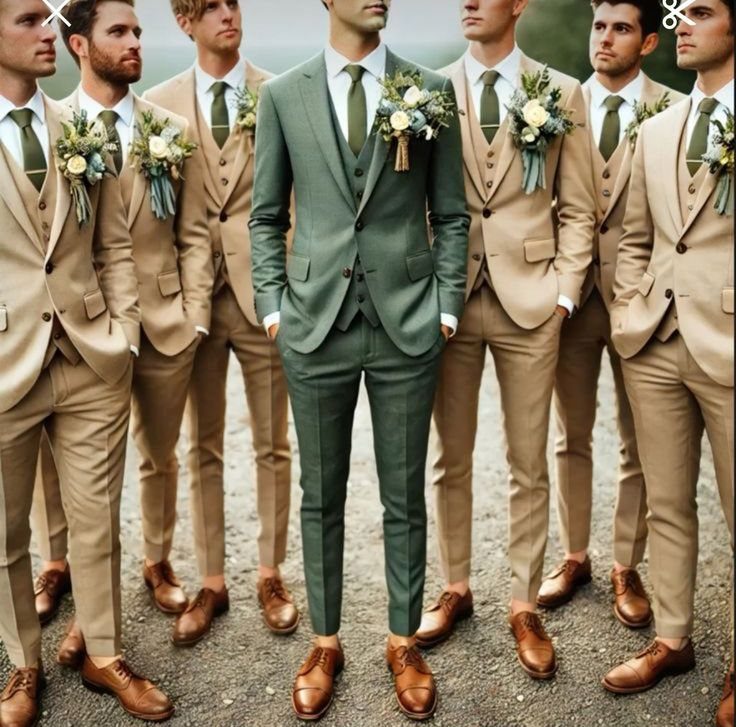
These ideas run from an easy-wearing sage linen summer suit to a double-breasted emerald option that borders on formalwear, and the one you pick depends on whether your wedding stays outdoors or moves inside.
The olive entry works for a fall barn wedding with its warm, muted tones, while the forest green tailored jacket needs a fit that lets you move through the whole day.
A white dress shirt keeps every shade grounded; start there.
1. Dark Green Three-piece Suit
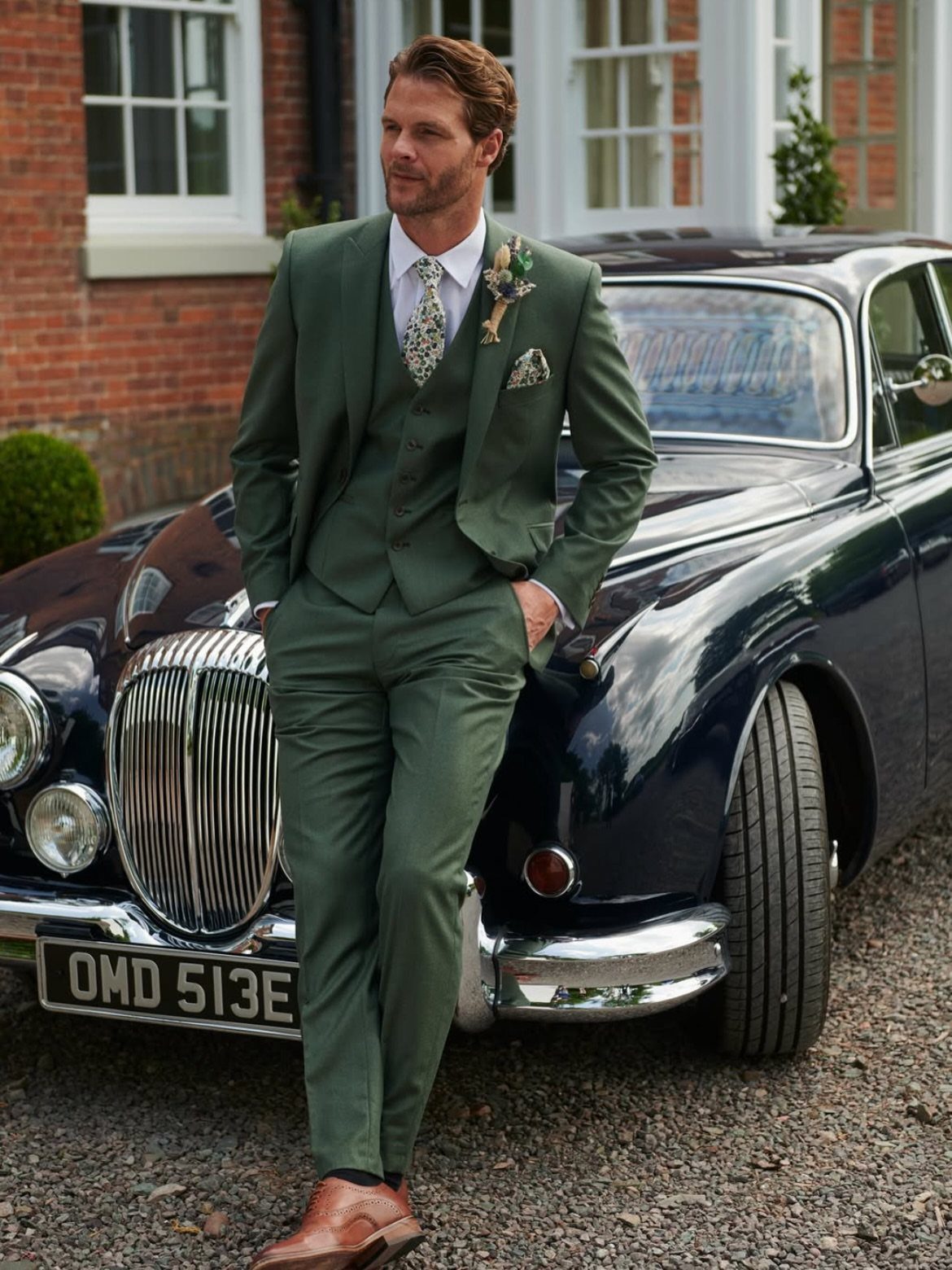
A dark green three-piece suit reads as formal without reading as black. The vest adds a layer you can lose by the reception, which matters if your venue shifts temperature between ceremony and dancing.
I would pick a white dress shirt over black every time; the contrast keeps the green from flattening into the background.
A small gold feather lapel pin, if you find one, sits better on the left lapel than a boutonniere for a clean evening look.
Budget for tailoring: the waistcoat especially needs to sit flat against your shirt with no gap at the buttons.

1. Soft and skin friendly material: 80% Polyester + 20% Viscose.
2. Sage Green Linen Suit
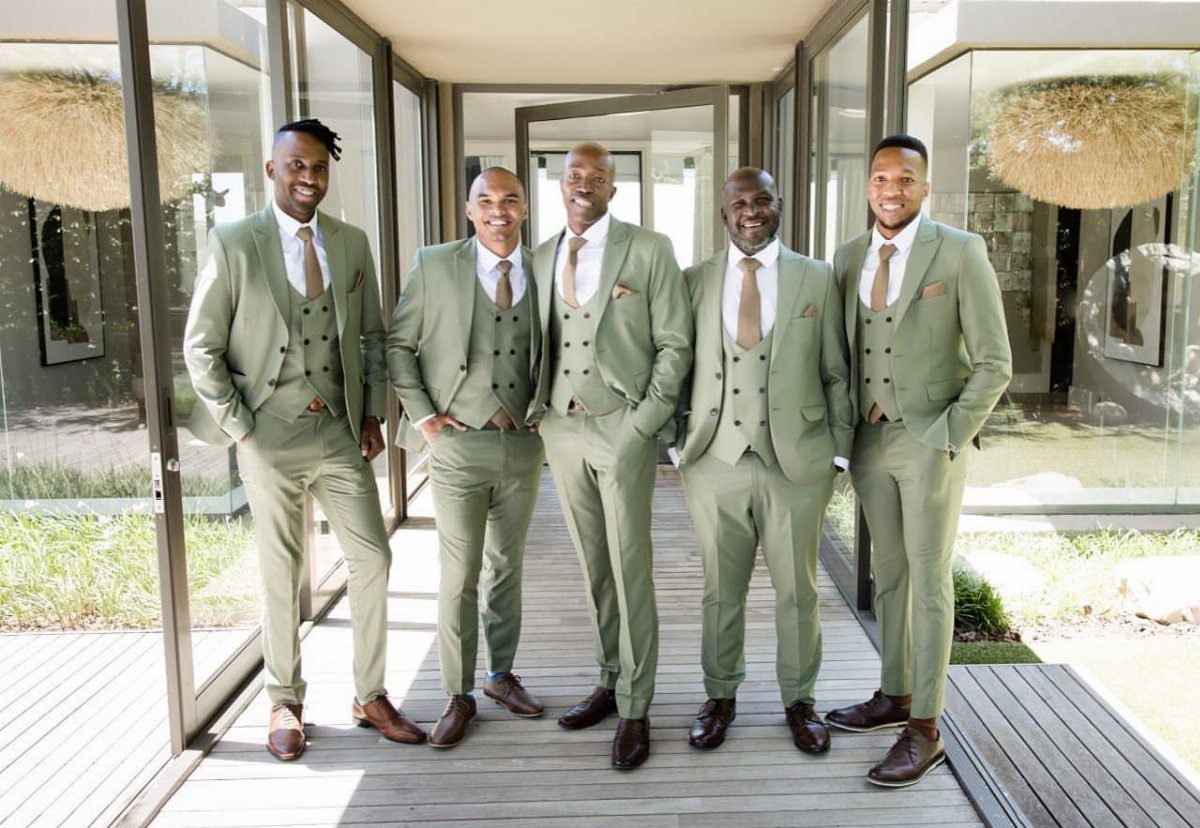
Sage green linen works for outdoor summer weddings where black wool would look like a costume and feel like a sauna.
Brown ties and brown shoes are what make sage read as intentional rather than leftover. Linen wrinkles; that is its nature, not a flaw.
I would order these suits early and hang them in a steamy bathroom the night before, not press them to death. A white floral boutonniere, the small kind with no trailing greenery, balances the softness without competing.
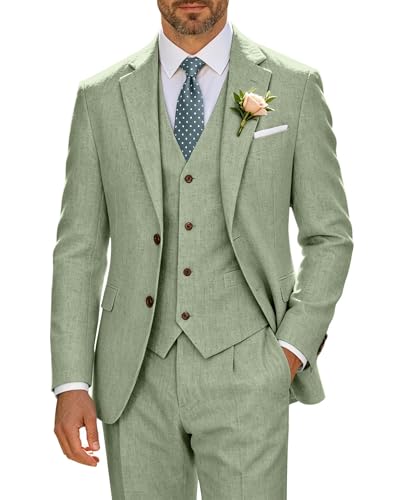
Advanced Linen Blend:Adopting premium weaving and finishing craftsmanship, this three-piece suit boasts a firmer texture than regular linen fabrics. It greatly reduces wrinkling tendency while keeping linen’s natural breathability and lightweight comfort. Gentle creases are inevitable as inherent fabric traits, letting you stay sleek and elegant all day for meetings and wedding events with simple iron maintenance.
3. Forest Green Tailored Suit
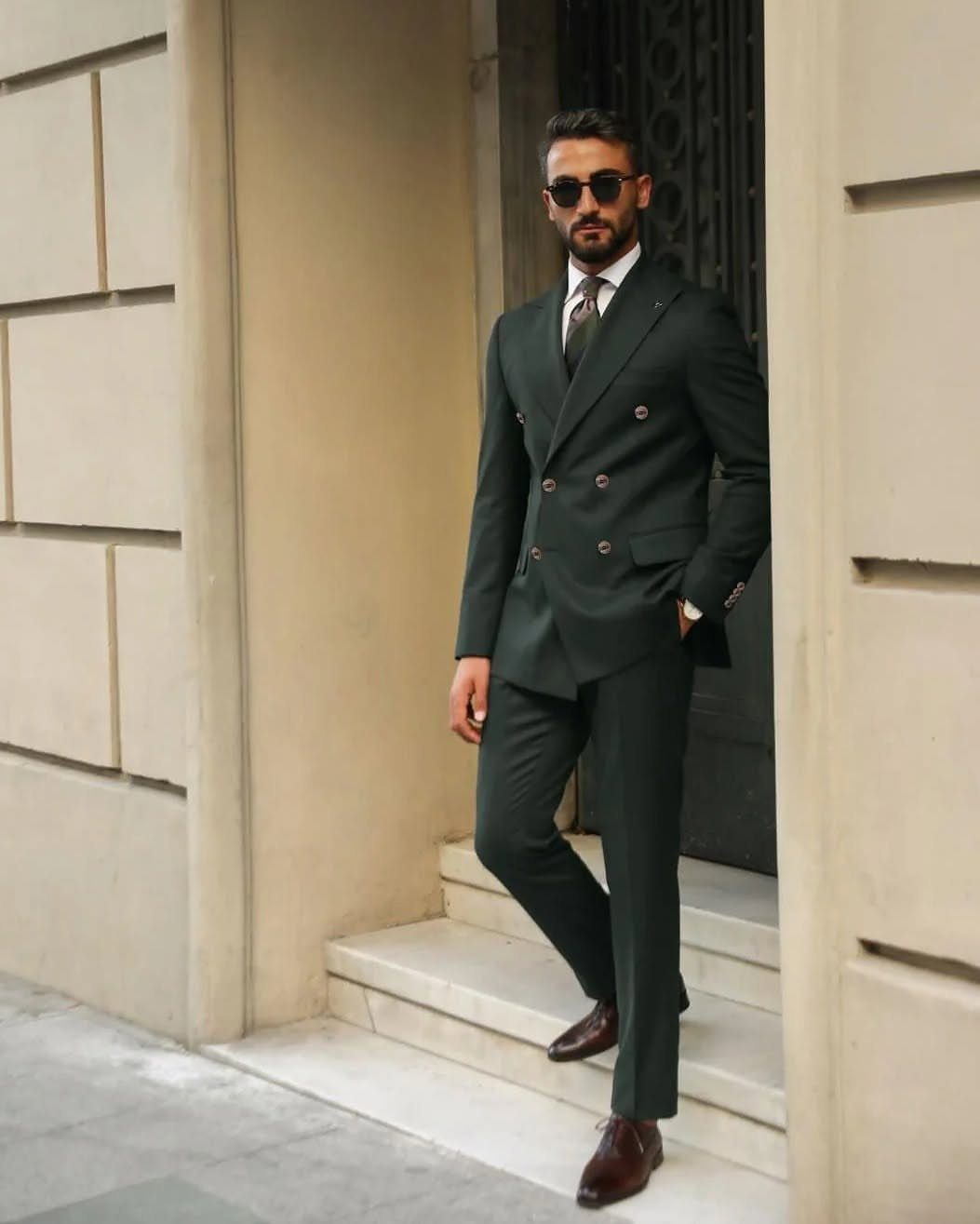
Double-breasted jackets carry more fabric and more formality than single-breasted; this one suits a groom who wants to look like he owns the room without renting it.
The forest green depth pairs naturally with brown leather belts and brown shoes, which saves you from the expense of new black dress shoes you will never wear again.
A bow tie or a floral boutonniere are your two main accessory choices, not both. I lean bow tie here: the wide lapels give it enough frame, and a boutonniere can look crowded against all those buttons.
Check that the jacket closes comfortably sitting down; double-breasted cuts bind across the middle if the tailor measures you standing only.
4. Olive Green Suit
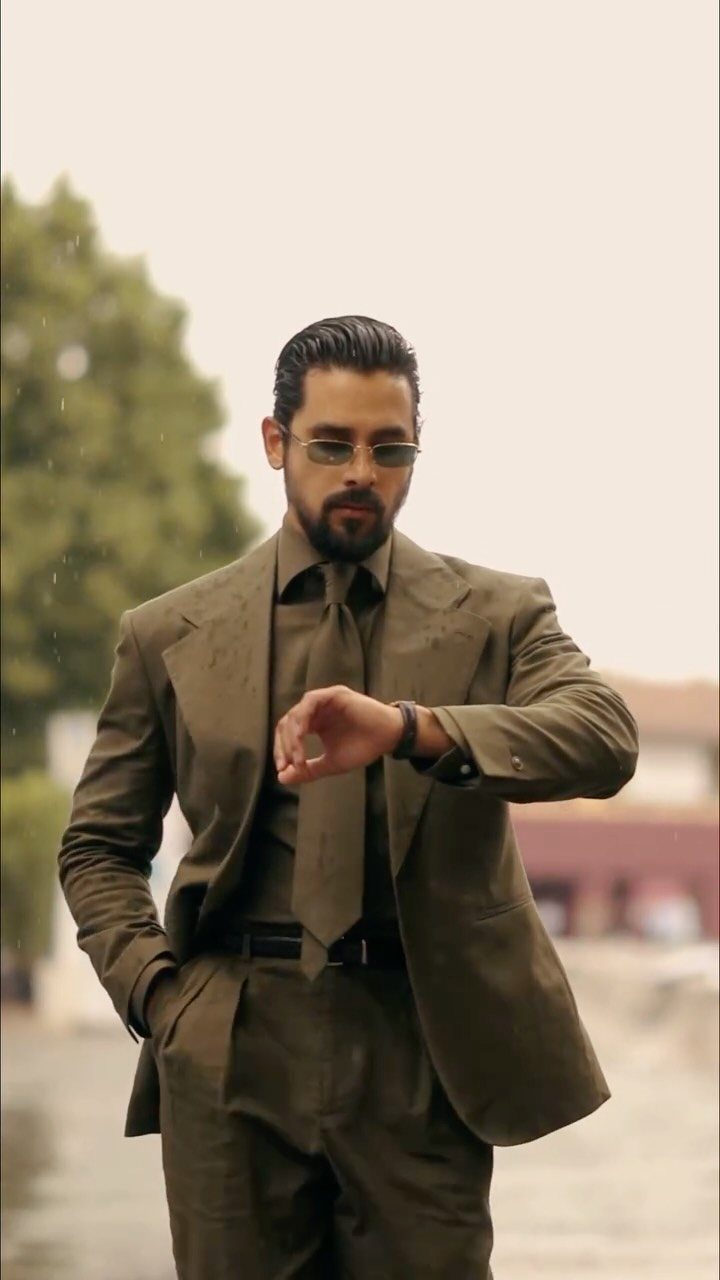
Olive green sits between brown and true green on the color wheel, which means it pairs with more shirt and tie combinations than you might expect.
The matching waistcoat and jacket share the same olive cloth, and the monochrome reads as intentional rather than accidental.
I would wear this to a fall barn wedding or any venue where the bride is going for warm, muted tones. Brown leather belt, brown shoes, and your accessories are done.
5. Emerald Green Suit
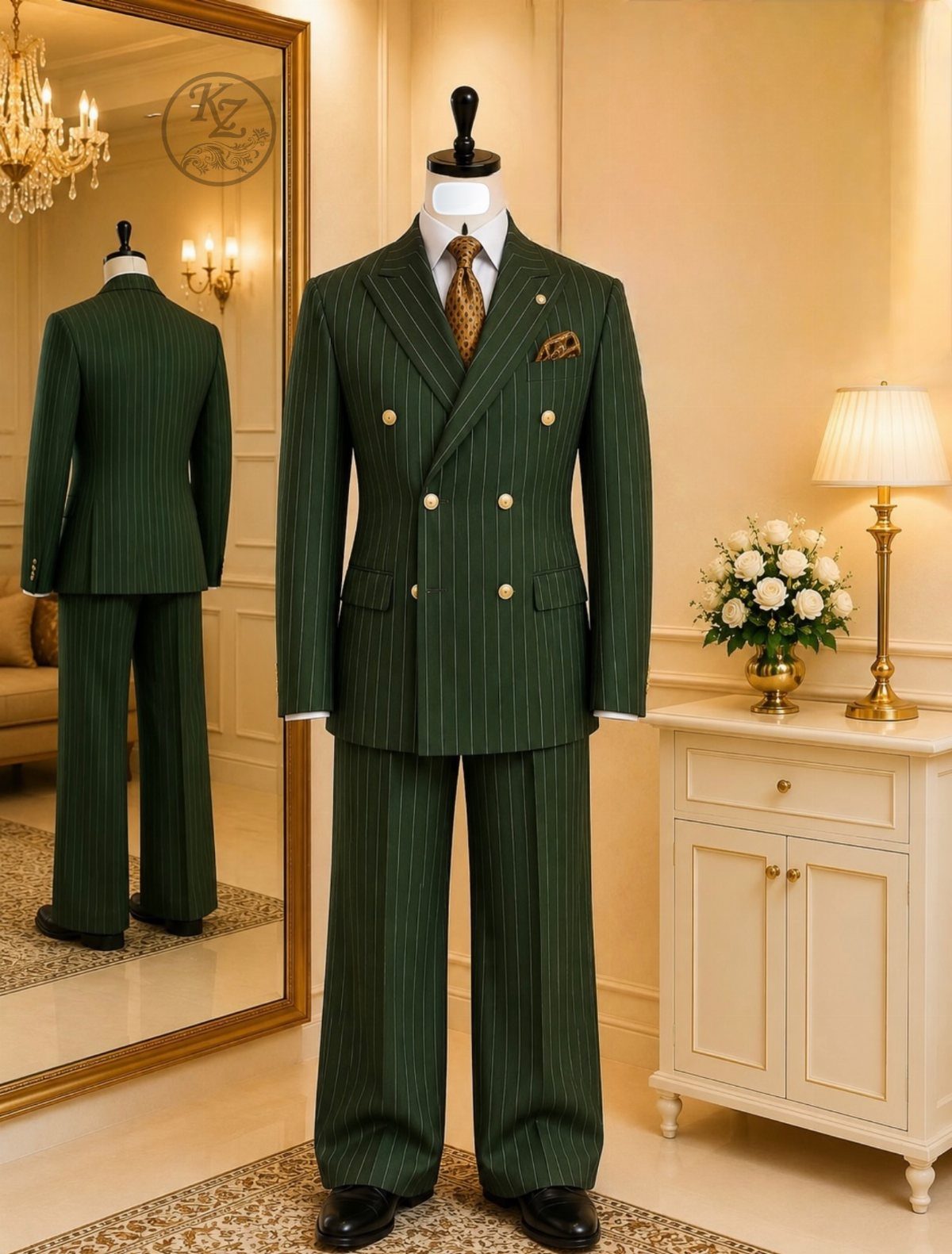
Emerald green carries more saturation than forest or olive; it photographs well but can feel loud in a small indoor ceremony. The pinstriped double-breasted version reads vintage opulence, which is a specific vibe you need to want.
Black satin peak lapels, a black bow tie, and a white floral boutonniere dress it to the maximum; for a slightly less formal wedding, I would swap the bow tie for a slim black silk tie and skip the boutonniere.
This color shows every spill, so budget for the groom’s dinner to arrive separately and eat before you put the jacket on.
6. Textured Wool Suit
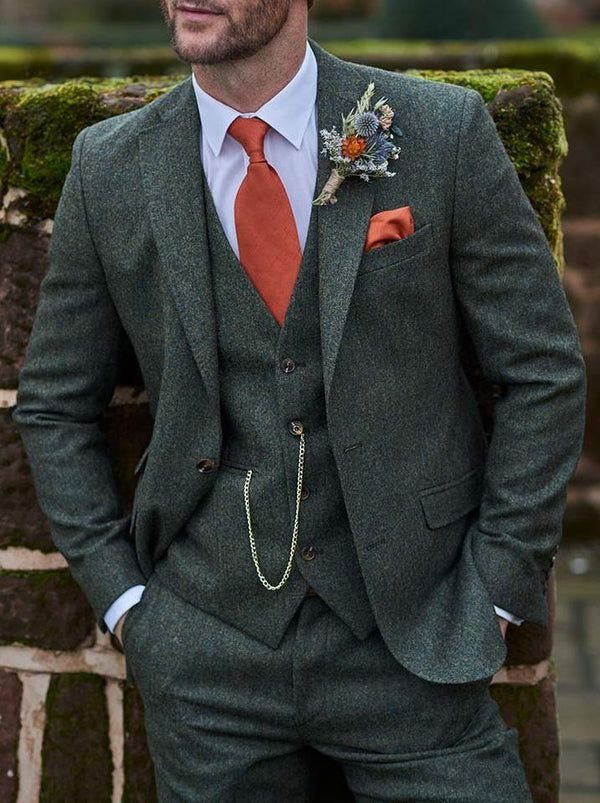
Texture in wool, tweed especially, catches light differently than smooth suiting and photographs with visible depth that flat fabric cannot match.
Burnt-orange is a bold tie choice against dark green; the colors sit near-opposite on the wheel without fighting. A pocket watch chain, if you have one or can borrow one, fills the vest’s expanse better than a third button alone.
This suit builds character over time; buy it, do not rent it, and plan to wear the jacket with dark jeans later. The three-piece construction is essential here: the texture without the vest can look like an orphaned blazer.
7. Floral Boutonniere
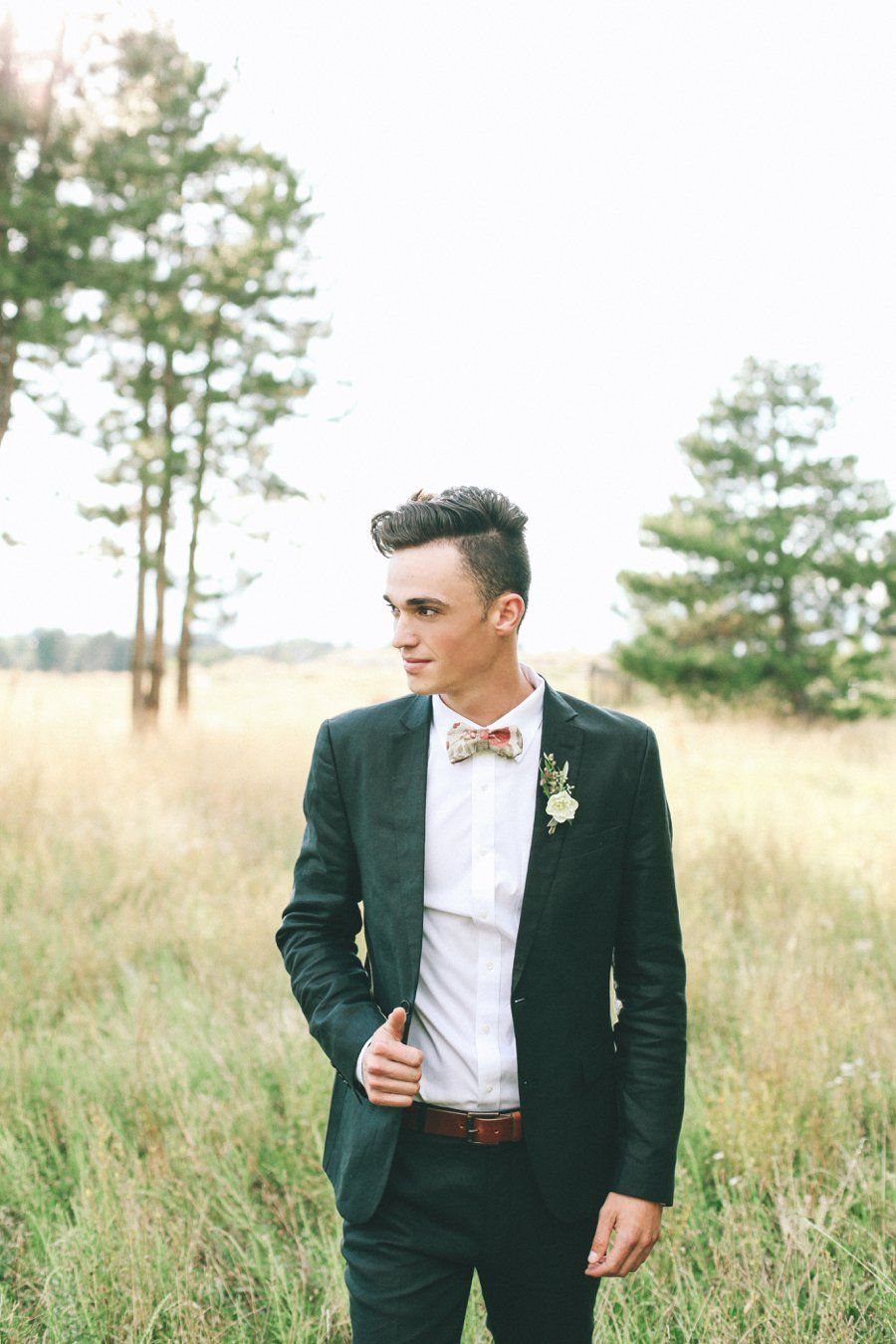
A floral boutonniere turns a suit from rented to considered the moment you pin it. Match the flower to the season: white buds for spring, dried lavender for late summer, a single burgundy mum for fall.
The stem posts through the lapel’s buttonhole from the front and anchors with a loop at the back; if your jacket lacks the loop, a thin safety pin hidden inside the lapel works, or ask your florist for a magnet back.
I would keep it small.
Anything larger than a golf ball competes with the tie instead of completing it. Order two: one will drop a petal or get crushed before the reception ends.
8. Matching Waistcoat
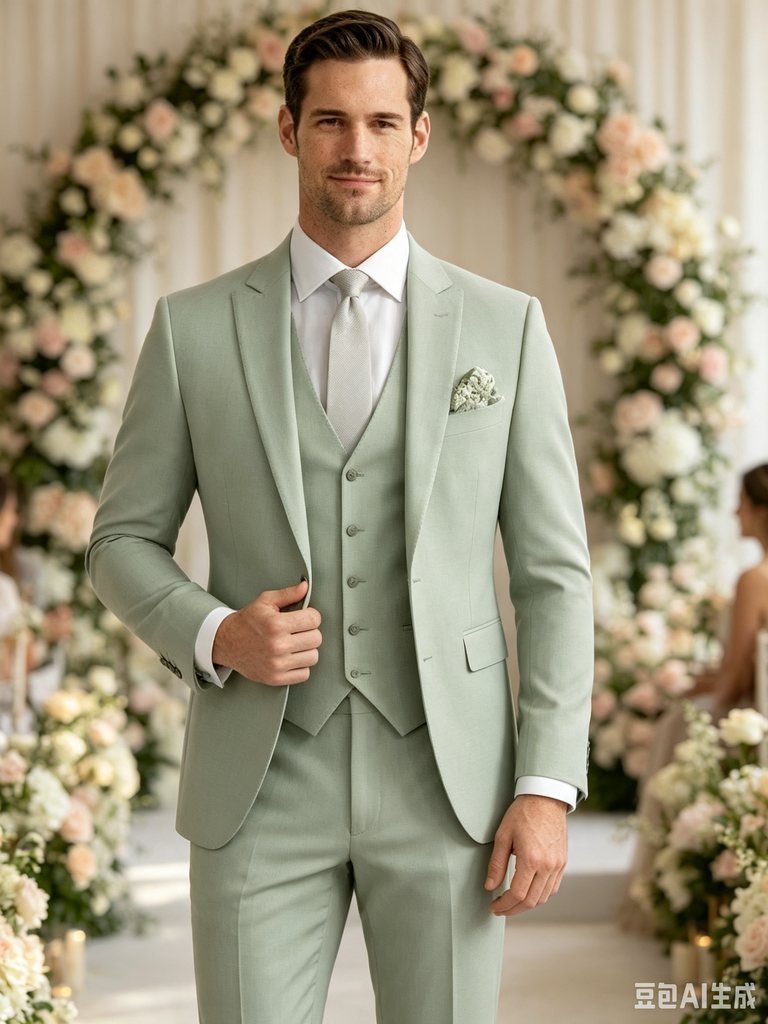
A matching waistcoat gives the three-piece suit its architecture, turning a jacket and trousers into an outfit with intention behind it.
The vest must be cut from the same cloth as the jacket, same dye lot if you can manage it; satin lapels on the jacket need satin lapels on the waistcoat, or the mismatch reads mistake rather than choice.
I would button the bottom button only on certain cuts and leave it open on others, but that varies by make: check the manufacturer’s suggestion or try both in a mirror and trust the line.
This is the piece that lets you lose the jacket after the first dance and still look dressed. Buy it fitted, not padded; extra fabric around the middle reads waitstaff at a distance.
Suit Styles
Three-piece construction is not the only way to wear green.
A sage green waistcoat and trousers paired with a cream single-breasted blazer gives you the color without the formality of a full matched set; the cream softens the look for daytime or outdoor ceremonies.
Shawl lapels on that blazer read less business than peak or notch, which suits a wedding where no one is wearing a standard suit.
If you do go full three-piece, the waistcoat and jacket should share the same cloth and dye lot; a deliberate mismatch can work, but only when you mean it.
A bow tie with the cream blazer works, though a standard necktie keeps it from feeling like costume.
Color Combinations
White keeps green grounded. A white dress shirt is the reliable base for every shade from sage to emerald, and a white floral boutonniere picks up that same tone without adding new colors to manage.
Cream silk ties sit between white and tan; they bridge the gap when a pure white feels too stark against olive or forest green.
Brown leather in belts and shoes is the other consistent pairing, especially with olive and its near-brown undertones. Floral patterns in ties or pocket squares should stay small; large florals fight the boutonniere for attention.
Seasonal Considerations
Linen suits for summer need planning beyond the purchase. For cooler months, textured wool catches light and holds warmth; tweed especially builds character over time and justifies buying over renting.
The weight difference matters: a summer linen suit is a single-season piece, while a good wool three-piece can be broken apart later, the jacket worn with dark jeans.
Order linen early; it often needs more tailoring adjustments than structured wool, and rush charges add up.
Groom’s Accessories
A tan bolo tie against dark green is a specific western choice that works if the wedding has that vocabulary; otherwise, standard neckwear keeps you from looking like you are wearing a costume.
Pocket squares should match the formality of the lapel: satin lapels want a folded silk square, not a stuffed linen one. One piece should set the groom apart from groomsmen, not every piece.
A custom bolo tie, a particular boutonniere, or a pocket watch chain fills that role; doing all 3 reads as trying too hard. Pick one, and let the rest support it.
Frequently Asked Questions
Is a green suit ok for a wedding?
Yes. I see green suits on grooms now as often as I see navy, and they read as intentional rather than risky.
Sage works for outdoor summer weddings, forest or emerald for evening formality, olive for a fall barn venue; the shade should match where the ceremony happens.
A white dress shirt goes under every green shade, so the foundation of the outfit is settled.
What does a green suit signify?
Green carries associations with growth and the natural world, which fits a wedding’s symbolic vocabulary without needing to announce it.
I chose sage for my own outdoor ceremony partly because it disappeared into the garden backdrop in photos rather than fighting it. The practical meaning matters more: it signals the groom chose something personal instead of defaulting to rental black.
What color compliments a green suit?
White is the base that works across every shade, from sage to emerald.
Cream silk ties soften the look when pure white draws too much contrast. I would keep any floral pattern small; large prints compete with a boutonniere instead of completing the look.
Are green suits still in style?
They are common enough now that I no longer count them as a trend. Pinterest boards and rental catalogs both stock multiple shades, and tailors I have spoken to treat green as a standard request rather than a custom order.
The question is less whether green is current and more which specific shade suits your venue and season.